About Favorites Classics Club Past Years Past Challenges
Showing posts with label classicsclub. Show all posts

Wednesday, December 29, 2021

Reading Reflection: 2021


It's almost the end of the year, and that means that it's time to reflect on how my reading goals went. This was a mixed year overall for me. I accomplished some major bookish milestones, but I often didn't enjoy myself while doing it. I ended up reading several very long classics that I either didn't love or was completely exhausted by, and those took away from the amount that I could read based on my mood. I was also a bit unlucky in what I chose to pick up when I could engage in mood reading. While I did find a few things I enjoyed, I didn't end up adding much to my all-time favorites list. 

I don't mean to be negative though--I'm still really happy with how I performed! Here's the breakdown for this year:


My Goodreads goal was to read 50 books, and I ended up reading 60. I did surpass my goal, but I fell far short of the 91 books I read in 2020. The reason for this was the aforementioned stack of long classics I ended up reading for my Classics Club Challenge. I'm hoping to bump this number up next year and get back to enjoying some shorter books again. You can view my year in reading here.


This year, I completed my Classics Club Challenge! I finished about a month early, bringing my five year quest to read 100 classic novels to an end. This was the most difficult year of the challenge for me by far. I had to read Gravity's Rainbow, which was extremely long and awful, and Les Misérables, which was extremely long and wonderful. I also had to read War and Peace again, but unabridged this time, so it would count. It felt pretty grueling at times, but I finished the whole thing. It was definitely the biggest reading accomplishment of my life so far. You can a longer version of my thoughts on it here.


Of course, I also finished the Back to the Classics Challenge for the seventh year in a row. I had a great time with it, like I always do. My wrap up post is here.


The last challenge I set for myself in 2021 was my Clear the Shelves Challenge. I set myself a goal of reading 50 books from my shelves and deciding whether to keep or donate them. I also aimed to acquire less books throughout the year. 

I did buy fewer books that I usually do. I wasn't as good here as I wanted to be, but I was still generally successful at reducing how much I added to my collection. Sadly, I didn't reach 50 books read from my shelves, but I did read 33 of them. I decided to keep 11 of those and added 22 to the donate pile. So basically, I was partially successful at this challenge. You can see all the books I read for this here.  


And that's all for 2021! As I said before, this year was both very successful for me and a little underwhelming too. I felt like I was on the verge of a reading slump for a lot of the time, and I totally did it to myself by having to read so many long classics in the same year. Without the Classics Club challenge to deal with in 2022, I'm hoping to read more than ever and focus on picking books I will enjoy. That's what this is all supposed to be about anyway, right? 

Sunday, November 28, 2021

Classics Club Wrap Up


Just about five years ago, I decided to join the Classics Club Challenge. The official rules called for participants to create a list of 50 classic novels to read over the course of five years. Being an overachiever, I decided to create a list of 100. I divided my list into several sections, in order to read somewhat diversely over the years. I had several different genres and time periods represented on it. My start date was January 1, 2017. My end date was December 31, 2021.  After years of dedication and commitment, I finally finished about one month early, on November 28, 2021.

Reading these 100 novels was a massive undertaking and probably one of the biggest accomplishments of my life. All of my reading for the past five years was centered around trying to finish it. I read at least one book from it pretty much every month and based a lot of my other reading goals and challenges around making progress on it. I found some books that I truly loved throughout my journey and some that I truly hated. I learned a lot about which kinds of classics I like to read and which kind don't work out for me. Somehow, I read War and Peace twice. Everything I read helped me to grow. I am now undoubtedly a better reader than I was before I started. This experience was so valuable to me that it's actually hard to explain here.

Reflecting back over everything I read and everything I experienced, I came up with three main takeaways:

1. Translations matter.
When reading a book originally written in a different language, it is extremely important to research which translation you are going to read. They are not all equal! Big chain bookstores like Barnes and Noble will generally use the translation that's in the public domain for their editions, which will not necessarily be the best one. A quick Google search will help you determine which version is the most highly recommended. Having a good translation can be the difference between struggling through a classic and actually enjoying it.

2. Spread out reading classics over time.
I knew that works from long ago would contain a lot of racism, sexism, and other disturbing ideas. What I didn't expect was how weary I would soon grow of it all. I do think there is a lot of value in exploring these books, but there is truly a lot you have to overlook. Reading so many of them in quick succession really brought this issue to the forefront. For me at least, it's better to spread out reading classics to avoid being constantly bombarded with the worst ideas of humanity over and over again. On the other hand, when you find a classic that does a good job of treating woman and people of color fairly, you know you have found something special. 

3. Pick classics based on enjoyment.
When I was creating my Classics Club list, my main goal was to create a list full of notable works from many genres. I put a lot of books on there that I felt like I "should" read, even though I knew I probably wouldn't like them much. I ended up paying dearly for that idea with picks like Ulysses and Gravity's Rainbow taking up huge amounts of my time and adding no real value to my reading life beyond building my stamina. Books I was excited about and thought I would like, I generally did. If I were to make another list, I would pick more books based on my favorite genres, time periods, and authors. It's good to explore a bit and try new things, but it's even more important to know yourself as a reader and treat yourself kindly. 

Now that I've finished everything, I looked back over my list and tried to figure out what my best and worst reads were. I definitely can't narrow it down to one of each. My favorites included Wives and Daughters, A Tree Grows in Brooklyn, Around the World in 80 Days, A Room with a View, We Have Always Lived in the Castle, The Bell Jar, Heidi, Black Beauty, The Custom of the Country, The Bluest Eye, Native Son, Germinal, and Les Misérables. My least favorites included Ulysses, Gravity's Rainbow, Midnight's Children, On the Road, Love in the Time of Cholera, and Daniel Deronda. I'm lucky to have found so many new favorites throughout this process. I'm also pretty lucky that out of the 100 books I read, there were less than ten that I truly didn't like at all.   

Now that this huge undertaking is officially over, I guess the next thing I have to decide is what to do moving forward. It feels weird to not have this challenge running in the background. This provided structure to all my TBRs over the past five years. Honestly, I'm tempted to make another list and do it all again, but I don't think that's my best move. After all, one of my takeaways was that you should spread out reading classics over time. I think I'm going to take a year off from it, and use that time to really research other classics I would like to read and put together a thoughtful list based on my interests. I'll still read classics in 2022 of course. I'll still do Back to the Classics if it's offered. I'm just going to take my time before jumping back into this awesome challenge for another round.

So I guess that's all, for now at least. This has been a true labor of love and I'm so happy to have finished it. Even so, I'm a little bit sad that it's over.

War and Peace (again) by Leo Tolstoy


Okay, so, here we go again.

Once upon a time, in the quaint, innocent year 2017, I thought I read Leo Tolstoy's famously long classic novel War and Peace. I was wrong. I discovered that I had read an abridged version after I finished. Feeling like this didn't count as reading the real thing, I pledged to eventually read it again before crossing it off my Classics Club list. The years went by and I put off this giant reread until I had no other Classics Club books left to finish. I completed 99 out of my 100 picks. It was finally time to go back and fulfill the promise I made to myself four years ago. It was time to read War and Peace as it was meant to be experienced--all 1,215 pages of it.

Armed with an unabridged edition and more than a little trepidation, I embarked on a marathon of reading. I had a lot of questions I wanted answered. Would reading the complete version make a difference? Would I like it any more than my first time around? Would my interpretation or appreciation level change? Would I even be able to tell a difference between the two versions at all, with several years between my readings? 

As it turns out, the answer to all of those questions was yes, and that fact really surprised me. In looking over my review from back in 2017, I feel like I read a different book. My experience was much better this time around, and I think that the main reasons for this were that I was reading a better translation and I have four more years of classics experience under my belt now. 

As I noted in my first review, the plot of the novel follows several upper class Russian families between the years 1805 and 1820. Russia is fighting in the Napoleonic Wars during this time, and the political strife affects the characters in different ways. The main players are as follows:
  • Pierre Behzukov, the illegitimate son of a wealthy Count whose fortunes take a dramatic turn when his father dies and makes him his sole heir. Pierre is intellectual, bumbling, and ultimately a good person at heart. He bounces between several different modes of life, most of which leave him feeling empty and confused. He tries living the party lifestyle and the religious life, but doesn't find fulfillment in either one. He becomes disillusioned and struggles to find deeper meaning in a world that often feels mean and random.
  • Andrei Bolkonsky, a moody prince who distinguishes himself through military service in the wars. He comes to prefer life in the service over dealing with his social butterfly of a wife, difficult to manage elderly father, and needy sister. He spends most of the novel away from home. When he falls in love with a beautiful young woman, however, he finds his attitude beginning to change.
  • Nikolai Rostov, a young count who takes an active role in the war. He spends much of the novel uncertain about how to manage his personal life. He faces intense pressure from his family to marry for wealth, as their personal finances are falling apart due to mismanagement. He falls in love with two different women (one rich and one poor) and must choose which of them to marry.
  • Natasha Rostov, Nikolai's beautiful sister. Everyone instantly feels drawn to her charismatic personality and child-like joy. She becomes romantically linked with a few different characters throughout the book and grows from a flighty, flirtatious girl to a more serious, mature woman as she learns from her experiences. 
  • Napoleon Bonaparte, emperor of France. Russians throughout the novel regard him with admiration or loathing depending on the current political situation, which does shift throughout the novel. Tolstoy focuses on his successes and failures throughout the story, and how his actions affect Russia as a whole over the course of the wars.
One aspect of my reading that stayed the same as my first time was keeping the character names straight. There are many more characters in the novel than the ones I listed above, and differentiating between them was challenging. Russian naming conventions are complex, and characters often go by more than one name or by nicknames that aren't necessarily close to whatever their original name is. Even more confusing was the fact that some characters have the same names or names that are only a few letters different. I often had to pause and think through who each character was while I was reading. This wasn't enough of an issue to seriously impact my understanding of the novel, but it was definitely a consistent point of confusion. 

Aside from that, the rest of my reading experience was different and better. I liked the novel well enough back in 2017, but I struggled with the overall purpose of it and had a hard time getting through the sections focusing on war. This time around, I didn't really have those issues. Don't get me wrong, the war parts were still less interesting to me than the family dramas, but I was able to navigate them better and find the beauty in them this time around. I feel like a lot of the military material was cut from my abridged version, and reading what was included felt choppy. Having all of it there helped me to see what Tolstoy was conveying more clearly. His analysis of the wars was extremely detailed and impressive. I could sense that his love for Russia ran deep and I appreciated that. I am sure that the different translation helped as well. I was reading the Constance Garnett translation from 1904 on my first try, and this time I read the Richard Pevear and Larissa Volokhonsky translation from 2007. It's hard to pinpoint exactly what was better about this version than the first one I read since it's been four years, but I liked it a lot more. It felt smoother and was easier to understand.  

Reading this version also helped me to understand what ties the whole novel together. It's love. I don't know why I had such trouble with this the first time around. It seems so obvious now. The whole novel centers around it. Love for a romantic partner, love for family, love for friends, love for a country, love of power, love of God, love for mankind--it's all there. Love leads the characters into terrible pain at some times and into great happiness at other times. It's transformative and powerful. It's behind every decision the characters make. It's the thread that ties everything in the story together, and the way Tolstoy presents it is remarkably relatable and understandable. I was very invested and interested in the characters this time around and I had a much better time staying engaged. This is a good book. It's an epic read. It's worth the time just to see the breadth and depth of human experience Tolstoy is able to convey in its pages.    

When I first started off my reread of this, I was viewing it more as a duty I was honor-bound to complete. I didn't expect to actually enjoy it or even be able to tell a difference from my first reading. War and Peace remains a challenging read, but I liked it much more this time around. My greater reading experience and having an unabridged, more modern translation ended up making a huge difference. In the end, I'm actually happy that I went back to revisit this novel. It was a great way to see how much I have grown as a reader over the course of this challenge and a really fitting way to finish it off. I think, in a weird way, this was the best ending possible for it. I'm really happy with how everything turned out, and I'm happy to finally be done with my Classics Club journey.    

Pierre's insanity consisted in the fact that he did not wait, as before, for personal reasons, which he called people's merits, in order to love them, but love overflowed his heart, and loving people without reason, be discovered the unquestionable reasons for which it was worth loving them.

Challenge Tally
Classics Club (#68 on my list): 100/100 books completed - DONE!

Total Books Read in 2021: 47


Sunday, November 21, 2021

Les Misérables by Victor Hugo


I first learned about Les Misérables in my sixth grade reading class. In what was a dubious use of instructional time, my teacher played us the entire cast recording of the musical version while we watched the words scroll by on a screen. Most of my classmates completely checked out during this, but I fell in love. I immediately begged my mom to buy me the soundtrack (which came on an expensive multi-disc CD set in those days) and listened to it over and over. Before long, I knew all the words and had a new favorite musical. I eventually got to see the show in person a handful of times, and it really kickstarted my love of all things Broadway. I knew it was based on a book, and I went out and bought it in the thick of my new-found obsession, but alas, I was twelve, and 1,200 pages was a bit much for me to handle at the time.  

When I was building my Classics Club list, it was an obvious choice to include this novel. I was still a bit intimidated by the length, but I really wanted to see how it compared to my beloved musical and experience the full story of it for myself. I didn't want to get too bogged down reading it though, so I decided to tackle it bit by bit. I faithfully read 25 pages of it in between each and every book that I read this year. When I got to only 100 pages left, I just went ahead and finished. As it's now the beginning of November, this means that I've spent almost the entire year working my way through it. It was basically the soundtrack to my reading year--always running in the background. This strategy worked too; I never felt overwhelmed by it and I consistently enjoyed it all year long.

It's hard to give a concise plot summary of the novel because it is so long and includes a lot of information. In addition to the main story, there are pages upon pages of French history, cultural information, and philosophical musings. There are many characters that appear only once to fill out a minor detail of the plot and are never seen again. There's even an extremely long section detailing the history of France's sewer system (what a wild ride that was). At its heart though, Les Misérables is the story of Jean Valjean, a man imprisoned for stealing a loaf of bread to feed his starving family. He eventually escapes from prison and tries to start a new life for himself. He begins using a different name, becomes a respected member of society, amasses a fortune, and adopts a young girl named Cosette, whom he raises as his own daughter. 

Despite his successes, however, Valjean is continually worried that his past will catch up with him. An extremely determined policeman named Javert has never forgotten about his case and wouldn't hesitate to arrest him if he ever crossed his path. Valjean's own conscience plagues him as well. Now that he's reformed himself, it bothers him that he is living a lie. Meanwhile, the political situation in Paris has come to a boiling point, and many young men are preparing themselves to fight against the monarchy. Valjean, not wanting to draw attention to himself, stays out of the situation. That soon becomes impossible, however, when Cosette falls in love with a young rebel named Marius. Once Valjean learns of their feelings, he can't help but be drawn into the rebellion in an effort to try and protect the man his daughter loves. 

This novel is undoubtedly a masterpiece. Everything about it feels important and intricate. Hugo paid an incredible amount of attention to detail in crafting this story; places are described down to the street names and house numbers, characters' backgrounds are extensively described, and the historical information behind many events is provided to put plot events in their proper context. Honestly, the amount of details provided are exhausting, which is why my method of reading the story in several short sections over a long period of time worked well for me. I didn't get too overwhelmed with the vast amount of information and I didn't ever get too bored. Honestly though, boredom wasn't much of an issue in general here. The story is long, but not particularly boring if you're a seasoned classics reader. The only sections I struggled with a little bit were the digressions into history. There were several places where the action stopped entirely and Hugo would give a lesson on topics ranging from wars to religion to philosophy. These parts weren't exactly thrilling, but I could still appreciate the care with which Hugo included them. All throughout my reading, I had the sense that Hugo wanted his readers to truly understand all the implications of what he was writing about. I think his efforts went a bit overboard, but it's really something to see how nicely he crafted everything.

The characters really stood out here as well, especially Jean Valjean. His story is both heartbreaking and triumphant, and you really come to feel for him as you read about everything he goes though. Hugo uses him to ask a lot of questions about morality. Can a convict ever become a respectable man again? Do people that break the law deserve second chances? Is stealing something to feed yourself the same as stealing for other reasons? Of course, Javert's unbending, black and white sense of justice comes into conflict with these questions, and watching him pursue Valjean throughout the course of the text is genuinely compelling. Valjean's relationship with Cosette is also heartwarming to witness. Their bond shows the power that love has to reform someone and completely change their lives.  The parts with Marius and the rest of the rebels were less interesting to me, but that's more a matter of personal taste. Those characters were developed as well as all the rest, and explored issues related to personal freedoms and patriotism.

In comparison to the musical, I was really surprised to see that the  show actually does a nice job of conveying the feeling and general story of the book. Obviously, the novel contains a lot more details and some differences here and there, but honestly, the show is a great summary of all the key plot events. It is actually a fairly faithful adaptation. I found myself singing the musical numbers in my head while reading some of the chapters. I could tell exactly where each song would appear. Some of the lines from the book appear pretty much word for word in the show. It was a pretty cool experience to read because it felt like I was combining two things I really love, and deepening my knowledge of both of them.

Reading  Les Misérables was a massive undertaking and took up most of my reading year. I started off feeling apprehensive about its length, but I ended up really enjoying it. I'm happy to say that it was totally worth reading. It was compelling, emotional, and complex. Finishing it felt like completing long, satisfying journey with friends. This was my last read for the Back to the Classics Challenge this year, and it was quite a nice way to end that too. I've had a bit of a shaky experience with classic novels this year, so it was nice to finish up this challenge with a good one. 

Finishing this novel means that my Classics Club Challenge is nearly done as well. I just have to reread War and Peace, and then that will be complete too. I'll be working on that throughout November, so the blog will be quiet. That book is just as long as Les Misérables is, but I'm trying to read it within a month. Hopefully it won't be too trying of an experience! 
   

Challenge Tally
Back to the Classics 2021 (A Classic in Translation): 12/12 - done!
Classics Club (#67 on my list): 100/100 books completed - done pending one reread

Total Books Read in 2021: 46


Wednesday, October 13, 2021

Orlando by Virginia Woolf


For my first read in October, I wanted to complete another book from my Classics Club list. With only two books left to finish (and one gigantic reread looming), my options were limited. I decided on Orlando by Virginia Woolf. I read Woolf's To The Lighthouse not too long ago and didn't completely hate it. Modern novels are not my preferred genre, so my lack of enthusiasm for it wasn't a surprise. I still wanted to try one more by her though, so I got started on this one, hoping for the best.

The novel is set up as a fictional biography of an English noble named Orlando and follows him through about 300 years in his inexplicably long life. He starts off the story as a teenage boy living in Elizabethan England. He enjoys a life of luxury on his vast family estate and has lots of humorous adventures as he grows to adulthood. He meets famous figures like William Shakespeare and Alexander Pope, writes pages upon pages of poetry, and has several love affairs, including an ill-fated romance with a Russian princess. When he turns 30, however, his life takes an unexpected turn. He wakes up as a woman. For the rest of her life, Orlando lives as a female, even eventually marrying and having a son. She explores all sorts of differences between living as a man versus living as a woman, and points out many of the social pressures and expectations placed on each gender in a witty, irreverent way.

That's a very general summary, but it's the best I can do. The book doesn't follow a traditional narrative structure, so it's difficult to describe. It was a  high-spirited and fun story, and not terribly difficult to read in the way that many modernist books are. I finished it pretty quickly and even managed to enjoy it a little, which was more than I thought I would be able to say initially. That being said, I have a very strong feeling that I missed a lot of the points Woolf was making--like I wasn't in on all the jokes. That's not too surprising, seeing as it was written in the 1920s. Beyond not catching out-of-date references though, I consistently felt like I was missing the larger point of it all, like I wasn't smart enough for it. If I was studying this book in a college course and had a professor to point out all the important nuances, I probably would have really liked it.

 I did a little research on my own after I finished and learned that Woolf based Orlando's character on the poet and novelist Vita Sackville-West. Sackville-West was Woolf's romantic partner and close friend, and this book was essentially a love letter to her.  It was also an experiment in the genre of biography and is considered an LGBTQIA+ classic due to the gender shift. There's a lot of layers to the story and it's definitely a unique novel with a lot of different elements to think about. It's not really for me personally as a reader, but I'm glad that I experienced it just because it's so weird.

I finished this book during the first week of October and I've had such a hard time writing this review. I've worked on it a little bit each day hoping for a breakthrough, but it turns out that I just don't have much to say about it. I'm going to cut my losses and end things here. I'm happy to have finished it and I'm happy to be able to finally cross it off my Classics Club list. There's not much left to read on there now. It's hard to believe I'm so close to finishing!

Challenge Tally

Classics Club (#77 on my list): 99/100 books completed

Total Books Read in 2021: 43


Friday, August 27, 2021

Julius Caesar by William Shakespeare


 After finishing Gravity's Rainbow earlier this month, I needed a little bit of a break from reading. This is a very unusual feeling for me, but I was really drained after making my way through that one. As August started winding down, I decided that I should try to read at least one more thing before September, so I went ahead and started Julius Caesar. This was the last Shakespeare play on my Classics Club list and I knew it would be a quick read. I wasn't overly excited for it as I'm not as interested in the plays that include history elements, but this is probably the last of Shakespeare's most famous works that I haven't read, so I wanted to give it a shot.

The plot is set in Ancient Rome and follows a politician named Brutus as he joins in a plot led by the senator Cassius to murder Julius Caesar. Caesar, who is well-liked by the public and fresh off a major military victory as the story begins, is about the be offered the crown of Rome. Brutus, an upright and honorable man, fears that the Roman people will lose their republic if they appoint a king. He comes to the conclusion that the only way to preserve the freedom of his country is to eliminate Caesar, even though he admires him and considers him a friend.  

Brutus and the rest of the conspirators execute the plan successfully and Caesar falls. At first, he is able to persuade the public of the righteousness of his views and they support his actions. However, Caesar's friend, Mark Antony, speaks eloquently on Caesar's behalf at his funeral and manages to bring many of the citizens back around to his point of view. The country is then plunged into civil war, with the people that support Caesar on one side and those who support the conspirators on the other. Ultimately, Brutus is forced to reckon with his murderous actions, his own sense of honor, and the strife he brings down on the country he loves so fiercely.

I was surprised to find while reading that this actually wasn't too bad. I especially enjoyed the first few acts of the play, where Brutus is grappling with taking part in the conspiracy and Cassius is pushing him hard in that direction. It is eventually heavily implied that the vast majority of the conspirators were motivated by greed or jealousy to kill Caesar, but Brutus was truly just concerned with preserving the democratic government of Rome. His morals conflict with his personal friendships, and his morals eventually win out. He kills his friend out of principle even though he loved him. What drama! 

This scene happens about halfway through the play though, and my interest started to wane a little bit after that. As is usual in a Shakespearean tragedy, things fall apart rapidly with lots of fighting, deaths, and suicides piling up until the conclusion is reached. I wish a bit more time had been spent in the end on the characters' emotions and internal struggles; things happened so quickly that the end felt a bit hollow. 

I think Julius Caesar ranks somewhere in the middle of the pack out of the works by Shakespeare I have read. I liked it more than I thought I would and, of course, there were lots of famous lines and speeches sprinkled throughout that I enjoyed discovering as I went along. I don't have a ton to say about it, but it was pretty good. I'm a bit sad now that I've finished the Shakespeare section on my Classics Club list, but I'm excited to be so close to finishing the whole thing! Just two books left to go before the end of the year. 

Challenge Tally

Classics Club (#2 on my list): 98/100 books completed

Total Books Read in 2021: 39


Thursday, August 19, 2021

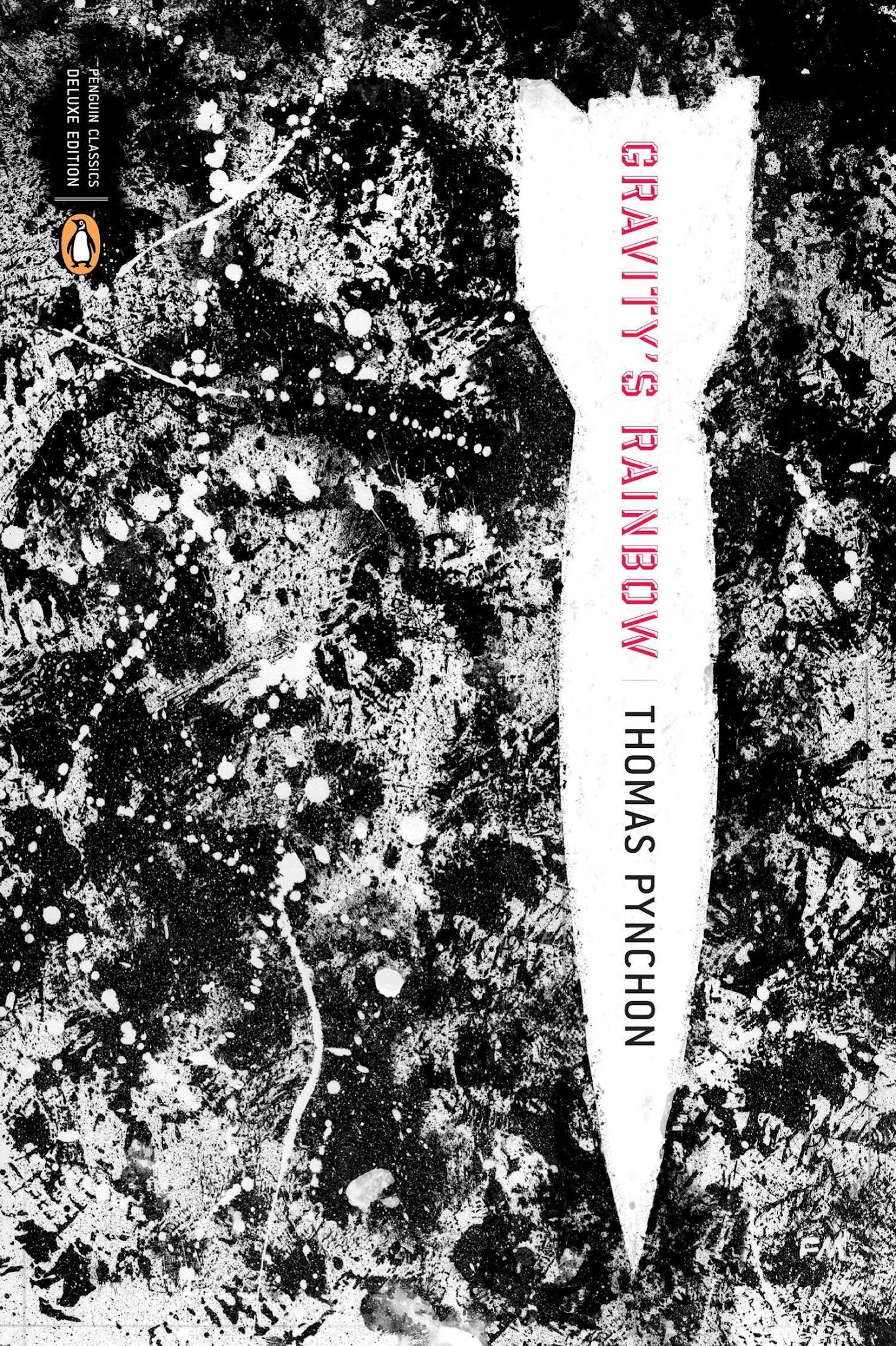
Gravity's Rainbow by Thomas Pynchon


I decided to start off my August reading with a book that I was very intimidated by, Gravity's Rainbow by Thomas Pynchon. Coming in at 776 pages, this postmodern novel has been praised by many critics as a masterpiece of the genre. That is exactly what made me nervous about it. I generally do not enjoy postmodern literature, but in my infinite wisdom, I put this book on my Classics Club list anyway. I wanted to include a wide variety of classics, so here we are. Why I ever thought variety was more important than my personal enjoyment when it comes to reading for pleasure is a mystery to me at this point. I guess the me from five years ago was a lot more ambitious than present day me. In any case, I finally finished the book and I'm here to report back.

Trying to describe the plot of this novel is quite difficult, as it doesn't exactly contain a coherent narrative. Speaking very broadly, the story centers around Tyrone Slothrop, a U.S. Army lieutenant serving during the end of WWII. He becomes obsessed with learning more about a certain German-produced V-2 rocket with the serial number "00000." This rocket is said to contain a mysterious device that he wants to uncover the secrets of. Several other characters with various ties to this rocket are also followed throughout the story. As the war continues on and moves towards its conclusion, more and more paranoia starts to set in and Slothrop struggles to hold it together mentally. The situations he finds himself in become more and more surreal and bizarre until it's impossible to tell reality from fantasy.

That summary doesn't give a true picture of what Gravity's Rainbow truly is though. The story contains over 400 characters, most of whom are only mentioned once. The plot doesn't stick to one timeline and goes off on long digressions that have little to nothing to do with the main story. Many sections are stream of consciousness-style and almost completely unintelligible. Reality is mixed with supernatural and fantasy elements and it is never made clear how much of it is actually happening versus being figments of the characters' imaginations. To say this is a challenging read is an understatement. This novel isn't mean to be understood in the traditional sense and at times actively tries to alienate the reader with graphic and disgusting content. Some readers appreciate reading stories that defy the typical conventions of a novel. That's the point of postmodern fiction, and Pynchon is very successful at doing that here. I, however, am not one of those readers. Gravity's Rainbow was a torturous, mind-numbingly boring experience for me and I strongly disliked it. I acknowledge that readers who appreciate this style consider it to be an excellent and important work, but it is very clearly not the book for me.  

I knew this going in, of course. I knew that I wasn't going to enjoy the style of it. I was hoping, at least, to see the merit of it by the time I finished. To be honest though, I was never able to latch onto anything that felt truly meaningful the entire time I was reading it. Pynchon comments on a lot of topics of course, like war, paranoia, and fate, but all of his points were so buried under layers of writing that were either confusing or offensive that it was difficult to take away any kind of clear message from it. I think that fact that I am a woman didn't help me here either, as a lot of the story centered around graphic sexual encounters in which women were not depicted well. At one point, there is a fairly long scene in which Slothrop has sex with a small child. The child behaves with as much desire and knowledge as an adult woman would. It was difficult to read. There is another scene in which a woman urinates and defecates into a man's mouth. Also difficult to read. Those are far from the only examples of graphic sexual content. All throughout the text, women behave in ways that feel exploitative and make no sense. I had a hard time feeling for any of these characters because I was so distracted by these scenes. There is very little in this book to appeal to women, even if they enjoy the postmodern writing style. It's the same for people of color, because there's a lot of racism running throughout the story as well.

In the end, what I am left with is confusion and relief that I finally finished reading this. I'm not sure why Gravity's Rainbow is regarded so highly. Doesn't all the racism, sexism, homophobia and pedophilia bother people? Is that something people are okay with looking past to appreciate the unique style of the novel? This is something I struggle with myself when it comes to enjoying classic literature, so I'm not trying to be glib here. I just think that this book in particular has a lot more blatantly objectionable things to look past than most. How do people reconcile this? Do any women actually really like this book? How about African Americans? 

I'm sure fans of Pynchon would say that I lack the intelligence to understand what he was trying to do. That might be true. I read a lot, but I'm certainly no expert in this type of writing. After this experience, I think I'm quite happy to remain that way. I've also seen other reviewers say that this book requires multiple readings to truly appreciate. To that I say, no thanks. One brush with coprophilia was enough for me. At least I can cross this book off my list now and say that I gave it a shot.


Challenge Tally

Classics Club (#70 on my list): 97/100 books completed

Total Books Read in 2021: 38


Monday, July 26, 2021

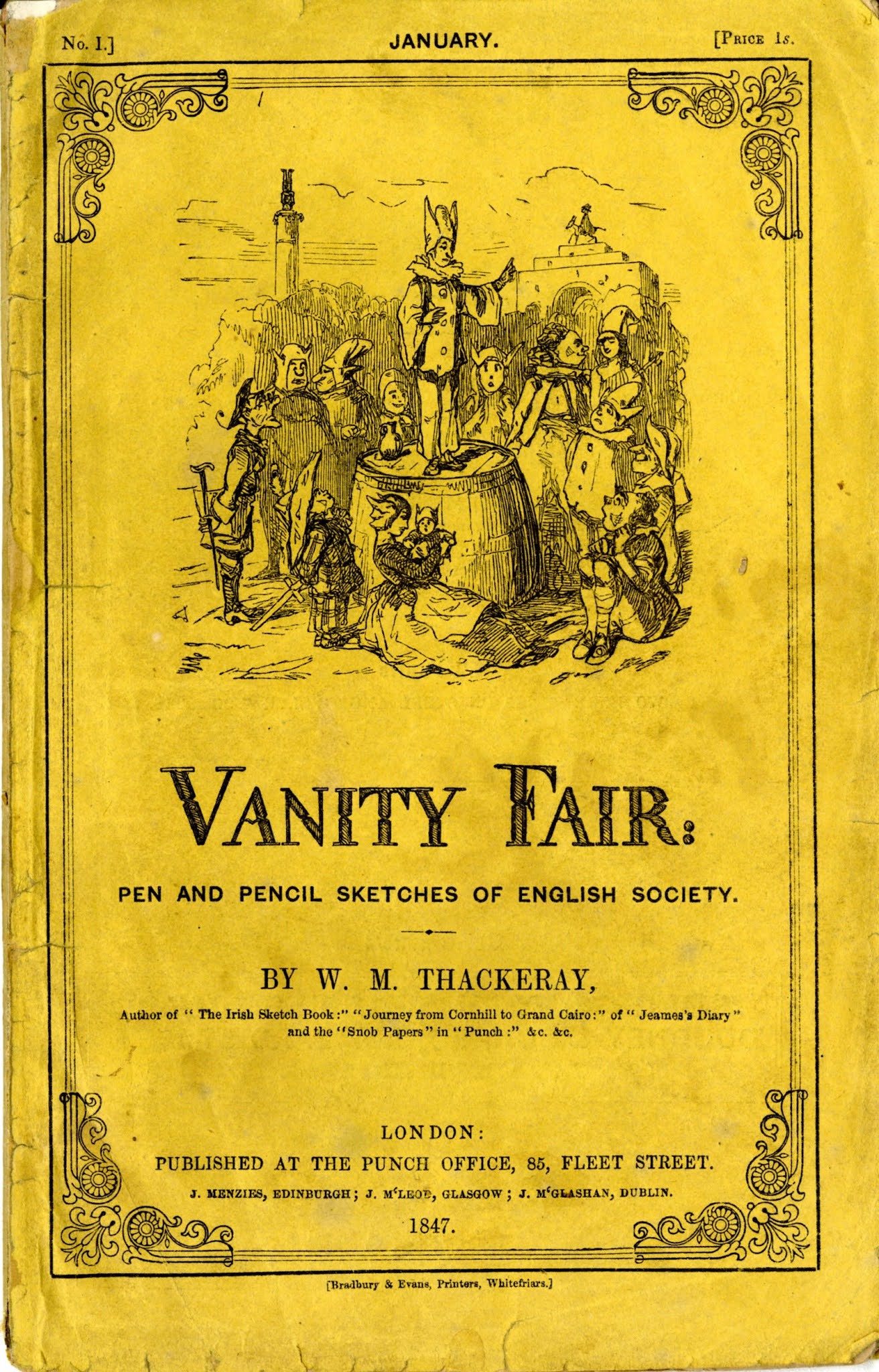
Vanity Fair by William Makepeace Thackeray


I think I initially wanted to read Vanity Fair as a teenager because of Reese Witherspoon. She starred in a movie adaptation of the novel back in the 2000s, and as a kid that grew up watching Legally Blonde and Cruel Intentions, I wanted to see whatever she did. I decided to read the book before watching the movie, so I bought the novel way back when I was in high school. I actually started reading it, but its length and difficult language were a bit too much for me back then. It was one of the few books I ended up putting down (I never ended up watching the movie either). I always knew I wanted to go back to it eventually, so I put it on my Classics Club list. When I saw that the Back to the Classics Challenge had a prompt to read a humorous or satirical classic this year, I knew that Vanity Fair would be the perfect fit. I started off my reading once again, hoping that all my experience over the years reading classics would help me to do better than I did on my first attempt.

The plot of the novel follows several different characters living in England during the Napoleonic Wars, the most prominent of which is Becky Sharp. Becky is a penniless orphan from a lower class family at the start of the story, but she doesn't let that get her down. She is determined to climb her way to the top of the social hierarchy using her formidable powers of deception, flattery, and flirtation. Throughout the course of the novel, she schemes her way into a marriage far above her station and then proceeds to live quite lavishly on "nothing a year" through her husband's meager gambling winnings, extensive lines of credit, and manipulation of her friends and in-laws. Her spirit is admirable, but her methods are very selfish and ruthless. Before long, her intricate system of lies and deceit start to catch up with her and she must find a way to maintain the social position she worked so hard to achieve.

Another character we follow through the novel is Amelia Sedley, an old school friend of Becky's that is in every way her opposite. Where Becky is devious, tricky, and bold, Amelia is shy, meek, and obedient. She starts the novel off very comfortable financially, but when her father loses his fortune through poor business decisions, she finds herself at the lower end of society. Instead of scheming to climb back up like Becky does, she quietly accepts her fate, performs all the admirable duties of a good daughter, and suffers mightily for it. Her fall stands in stark contrast to Becky's rise, and the reader is left to wonder if all her goodness will end up being rewarded in the end. 

Through the stories of Becky, Amelia, and a handful of other characters, Thackeray mercilessly lampoons English society and their fixation on social status and money. The novel abounds with instances of people behaving quite badly under the corrupting influence of wealth. They betray friends and family, disregard the feelings of others, and generally behave like monsters in the pursuit of obtaining or maintaining their money. The rich are shown to be silly and callous and the characters that struggle or don't care much about such things are generally shown to be more admirable than their richer counterparts. The overall message is clear - there is nothing about having a lot of money that makes anyone particularly deserving of luxury or status. The divisions between people that have money and those that don't are entirely random, and not at all connected to strength of character or innate goodness. The process of acquiring money if you don't have it is quite corrupting and can lead to personal disaster when taken too far. At the same time, sacrificing and living without can lead one into an equal amount of misery and sadness. Essentially, money is tricky, life is random, and people are terrible. The book is really funny though, I swear.
 
I enjoyed Vanity Fair well enough. It was full of biting sarcasm and hilarious characters. I appreciated the sense of humor throughout it and could tell that Thackeray was a master of social satire. What I struggled with was its length. My edition of the novel had 696 pages of tiny print, and most of that felt rather aimless. It follows many characters over the course of many year and there's never really one driving plot that unites them all together. It's that kind of book where you're watching characters doing things and have no idea what any of it is building to; you're just along for the ride. There are a lot of obscure allusions to culture and history from the time period which were difficult to understand as well, so parts of the text were confusing. I tried to set myself a goal of reading 50 pages a day, and it was tough to stick to that. It was good, but it definitely wasn't a page turner. If you're in the mood for a big, thick classic though, you could definitely do worse. 

I think what I liked the most about the story were the shades of gray among the characters. No one is all good or all bad, not even Becky, who has got to be one of the most outrageously selfish characters of all time. This made the story feel a bit more authentic, even though it's clearly a satire. Similarly, I liked the idea in the text that those who end up with money don't necessarily deserve it. Those who rise or fall in society largely do so based on accidents of birth, and hard work or virtue do not provide a straight path to financial security or even to happiness. In fact, it's often that people succeed by employing the exact opposite tactics. These are cynical ideas to be sure, but they make for an interesting story. It's funny that although this book was set during the 1800s, the ways money can cause problems in society hasn't really changed that much. It was the root of all evil back then and it remains so today.

Overall, I thought Vanity Fair was a solid read, although the process of getting through it felt hopelessly long a lot of the time. Still, it had an interesting cast of characters, contained some excellent social commentary, and definitely gave the reader a lot to think about. I'm glad to have experienced this one; meeting Becky Sharp alone was worth the price of admission. Reflecting back on my first try at the novel, it's pretty cool to think about how far I have come as a reader of classics. I thought this book was too difficult back in high school, and now it was not a big deal at all to understand (obscure allusions notwithstanding). Now I suppose my next step will be to finally watch the movie adaptation and see how it measures up.

Challenge Tally

Classics Club (#64 on my list): 96/100 books completed
Back to the Classics 2021 (A Humorous or Satirical Classic): 10/12

Total Books Read in 2021: 35


Wednesday, July 7, 2021

The Tempest by William Shakespeare


I had a few Shakespeare plays left on my Classics Club list, so I decided to try one of them for my next read. I settled on The Tempest, a play I didn't know too much about but was intrigued by. Prior to starting, all I knew was that it contained magic and a wizard-like main character. That sounded so weird for a Shakespeare play that I had to see what it was like. The fact that it was also pretty short interested me as well. I've read a lot of long books lately and I wanted a bit of a break. I went into my reading hoping for a unique experience, and I wasn't disappointed. 

The plot of the drama centers around Prospero, the former Duke of Milan. As the play begins, he's been stranded on a remote island with his daughter Miranda. They've been there for twelve years after Prospero fell victim to a plot to depose him led by his own brother, Antonio, and Alonso, the King of Naples. Prospero is a powerful sorcerer, and he uses his magical abilities to control the only two other beings on the island, Caliban and Ariel, whom he uses as his servants. Caliban is described as a monstrous creature of some sort, and Ariel is a magical spirit. Both submit to Prospero's bidding and are essentially his slaves.

Prospero has little to do on the island aside from tutor his daughter and dream about getting revenge on Antonio and Alonso. He finally gets his chance when they sail near his island on their way back from a royal wedding. He uses his magic to create a tempest and has Ariel to shipwreck them, causing them both to wash up on his beach along with a handful of other prominent nobles, including King Alonso's son, Ferdinand. With all his old enemies within his grasp, Prospero enacts an elaborate scheme to get vengeance on those who wronged him and get his title back. He uses a combination of matchmaking, guilt, and deception to push his way back to the top, and delivers a powerful message about loyalty and family to those who don't understand the value of it.

As I mentioned before, I knew going in that this play was different from the Shakespeare works I was familiar with. That ended up being a bit of an understatement. This play was absolutely wild. It had no rules. There were magic spells, spirits, witches, invisibility cloaks, and even some literal goddesses. You could never predict what would happen next, because it seemed like anything could happen in this world. No background is ever established for all these odd elements. Prospero seemed to have a lot of power, although where it came and the way he used it was very unclear. There was a mention of him needing certain books to wield it, but details on any of those elements were basically nonexistent. Caliban was repeatedly referred to as some kind of misshapen monster, but exactly what he is and what powers he may have had aren't described. It was the same for Ariel. Where he came from, what he could do, and the magic Prospero relied on to control him was never explained. It was all pretty bewildering.

This is a play, of course, and it was written a very long time ago, so I'm not going to knock it for not having modern worldbuilding or descriptions; this was meant to be seen, after all, and not read. My goodness though, it was strange. It felt different than other Shakespeare plays that included magical elements. I read A Midsummer Night's Dream and Macbeth in high school, and of course I read Hamlet just recently. All of those have elements of magic or the supernatural in them. This play felt weirder and more disorienting than all of them though. You definitely had to suspend your disbelief to get into the story.

That being said though, this was still a fun play to read. The setting was bizarre, but the themes were relatable and pretty standard for a Shakespeare play. Prospero suffers a betrayal. He wants his rightful title restored and he wants to punish those who wronged him. His brother Antonio is a ruthless and greedy character, hungry for power and wealth. King Alonso is a man tempted into a misuse of his power, and he regrets it bitterly when confronted with the possible loss of his son. Ariel owes Prospero a debt and must repay it in order to regain his freedom. Miranda and Ferdinand are an innocents struggling under the weight of their families' misdeeds, but hopeful in making their own happiness. All of these situations and characters are compelling and make for an interesting story. Watching them, with their very human problems, interact with the supernatural set dressing was engaging. 

The Tempest is categorized as either a comedy or a tragicomedy depending on which source you look at. It contains both comedic and serious elements, and it doesn't end in a bloodbath, so either label will work. With all the magic and lack of murders, it was definitely a different experience from two of my more recent reads--Hamlet and King Lear. It was more lighthearted for sure, and I think that made it feel less impactful as well. I didn't find myself forming much of a bond with the characters or coming to care deeply about their situations. The stakes never felt particularly high, despite all the dramatic magical displays. I was still entertained though, and I think this would be awesome to see performed in a theater. Out of all the Shakespeare plays I have read, this one falls in the middle of the pack for me. It was a quirky little read and I'm glad I got the chance to experience it.


Challenge Tally

Classics Club (#5 on my list): 95/100 books completed

Total Books Read in 2021: 33


Wednesday, June 16, 2021

Tess of the D'Urbervilles by Thomas Hardy


As I mentioned in my May wrap up post, June is my birthday month. As a gift to myself, I was determined to find some classics left on Classics Club list that I have the best chance of enjoying. Out of the seven (!) books left, Tess of the D'Urbervilles seemed like the best option. I've read a handful of Thomas Hardy books in the past. A few were before I started blogging, but more recently read Jude the Obscure and Under the Greenwood Tree. While the latter one wasn't my favorite, I did like Jude the Obscure. I know that Tess is somewhat similar to that one (at least in misery quotient), so I decided to give it a go.  

The plot of the novel follows a young woman named Tess Durbeyfield. As the story begins, she is sixteen years old and living with her family in the small English village of Marlott. Her parents are simple and often drunk, and as Tess is the eldest and the most responsible, she ends up taking on a lot of the household work and childcare for her numerous little siblings. When an accident with the family's horse threatens their meager income, Tess is forced to take an outside job minding the poultry at the house of a wealthy family several miles away. At her new place of employment, she meets a son of the household named Alec D'Urberville, who instantly begins pressuring her for a sexual relationship. He is older than she is and merciless in his campaign. Tess, being a virtuous-minded young lady, continually resists his advances. Eventually however, Alec manages to get what he wants. The text is vague on whether he rapes Tess or not - it is implied in some parts, and then in other sections of the book Tess speaks of "giving in" to him. In any case, Alec takes advantage of her youth and inexperience with men and then refuses to marry her.

Outraged with him, Tess quits her job in his household and returns home. Before long, she discovers that she is pregnant. She has the baby, a little boy she named Sorrow, but he dies as an infant. Tess is thrown into deep despair over both the loss of her son and the loss of her virtue. She is now a disgraced woman. In an effort to try and get a fresh start somewhere else, she travels to a distant dairy farm and takes up work as a milkmaid. At this farm she meets Angel Clare, a provincial gentleman in the process of learning to be a farmer. The pair are instantly attracted to each other and fall in love. Before long, Angel asks Tess to marry him, but she continually refuses him. She knows her background makes her unfit for marriage to an upstanding man. Angel won't be deterred though, and after asking her again and again, she finally gives in. On their first night as a married couple, Tess tells Angel about her past, hoping he will be understanding. Instead, he instantly abandons her and travels overseas to start a farm in Brazil. 

From that point forward, Tess is thrown into a life of misery and hopelessness. While Angel assures her she can apply to his parents for money at any time, her pride stops her from taking advantage of his offer. Instead, she takes on a life of difficult, unceasing labor on various farms. She desperately hopes that Angel will return one day and forgive her, but as the months and years wear on, she begins to lose faith in him. Eventually, the man who first took advantage of her, Alec, returns and begins to pursue her again, this time with tempting offers of marriage and financial stability for her and her family, whose condition has continually worsened in her absence. Tess is torn between her desire to wait for Angel, the true love of her life, to realize his love for her and come back, or to give up on him and accept the tempting offer of immediate security from Alec. Her indecision and desperation eventually drive her towards a shocking act that will seal her fate.

Figuring out how I felt about this novel was a little tricky. On the positive side, it was classic Thomas Hardy. The writing was beautiful, it was easy to read, and the world building was excellent. I truly felt like I was in the English countryside while reading. The characters were well developed too - it was easy to sympathize with Tess and feel disgusted by both Alec and Angel. What I didn't love so much was the pacing. This book was nearly 400 pages long, and the parts where big plot events happened felt very far apart from each other. Most of the novel was composed of descriptions of farm processes and Tess' abject suffering. They were beautifully written descriptions of farming and suffering, of course, but it did feel very slow throughout the story. I set myself a goal of finishing 50 pages a day throughout the duration of my reading, and while I was able to do that comfortably, I never felt motivated to go any further than that. It was good, but it wasn't exactly a page turner.

Hardy explores a lot of social issues throughout the text, including the impact of mechanization on the farming industry, city life versus country life, and the sexual morality of the time period. It was the last topic that interested me the most, and happily, I was okay with Hardy's treatment of it. I've written quite a bit on the blog about being displeased with parts of classics that haven't aged well. I've been going through an unlucky run of really racist, homophobic, and anti-Semitic novels lately and it's driving me crazy. Here, it was different. The characters in Tess are undoubtedly misogynistic as part of the plot, and you can tell Hardy is against that. He unequivocally depicts Tess as being wronged and treated unfairly by both Angel and Alec. Her tragedy is due to the shortcomings of an overly moralistic society, and not due to anything she has done "wrong." In fact, Hardy even goes a step further and shows examples of both of the men in Tess' life committing the same type of acts that they vilify Tess for, highlighting the double standard between men and women. I was quite happy to see an author advancing a forward thinking point of view here. Honestly, it was a relief. Obviously, his treatment of the topic wasn't perfectly modern, but it was clear his heart was in the right place on the issue.

So ultimately, Tess of the D'Urbervilles was a good read for me. There were parts that were very slow and monotonous, but the beautiful writing and exploration of social topics helped to balance that out. I think that Jude the Obscure will remain my favorite Hardy novel for now, but this one comes in second and is a worthwhile read for people interested in literature of this time period.  

Challenge Tally

Classics Club (#94 on my list): 94/100 books completed

Total Books Read in 2021: 30


Monday, May 24, 2021

Absalom, Absalom! by William Faulkner


I bought my copy of Absalom, Absalom! when I was in high school (which is about 18 years ago now). I was just getting interested in building up a personal library of classics, but I didn't really know where to start. My knowledge of literature was in its infancy, and all I had to go on was name recognition of certain authors and an appreciation for the handful of books we read in class. I decided to do some research and looked up a list of classics. The list I found was organized alphabetically by title, and this book was at the top of it. So that's how Absalom, Absalom! came to sit on my shelf. Obviously, I didn't end up reading it at the time and I've carried it from home to home over the years.

In the years since then, I have learned much more about different genres, time periods, and authors. I've learned enough to know that William Faulkner is probably not a good match for me. However, when I was making my Classics Club list, I decided to give this book a try since I had hung onto it for so long and because Faulkner is one of the most famous authors I've never read anything from. Reluctantly, I finally picked it up this week.

The plot of the novel follows the rise and fall of the Sutpens, a wealthy family living in Mississippi during the Civil War era. It's patriarch, Thomas Sutpen, arrived in the town of Jefferson prior to the war with a group of slaves, an architect, and almost no money in his pocket. Through some shady dealings with a Native American, he manages to purchase a large parcel of land and works throughout the next several years to build an empire upon it. He becomes rich and successful and eventually marries a local woman named Ellen Coldfield. They have two children together named Henry and Judith. For a time, it seems that everything has worked out according to Sutpen's plan, but certain events from his past soon come back to haunt him. His own past decisions, the decisions of his children, the fall of the Confederacy, and his arrogant, reckless attempts to solve his problems eventually lead to the downfall of everything he had built.

This story is told entirely in flashbacks from a few different perspectives, with most of the story being told through Quentin Compson, a young man living in Jefferson several generations later. He hears the story of the Sutpen family mostly through his  father and grandfather and partially through Rosa Coldfield, a cousin of the Sutpen family who was actually there when events were unfolding. The narration is difficult to follow, told out of order, and not always accurate. There are several instances in which information is merely guessed at or speculated upon and presented as fact. In doing this, Faulkner is playing with history and commenting on how "truth" will vary depending on who is telling the story. All of the information the characters give is accurate to the best of their knowledge, but it is invariably colored by their own feelings, prejudices, and life experiences. As such, we never get the true version of the Sutpen story, but we get enough to understand the key events and main reasons for the family's failure. 

Faulkner's difficult writing style is well-known, and it is a true challenge to read this novel and actually understand it. He uses stream of consciousness to convey the story, with most of his sentences going on for half a page or more. There are very few paragraph breaks as well. The subject and speaker of the sentences changes frequently, often mid-sentence, making it difficult to keep track of who is talking and what they are talking about. I was able to understand the gist of it while I was reading, but I did find myself consistently turning to chapter summaries online, just to make sure I was interpreting everything correctly. It wasn't as bad as Ulysses to make sense of, but it wasn't a fun read either. I could see Faulkner's skill throughout the novel, and I did get the sense that he was doing something difficult and significant in his writing. I can appreciate his experimentation and uniqueness, but it was not enjoyable to read this. I had to put myself on a strict regimen of 50 pages a day, otherwise I knew I would never finish. I was not happy to pick it up each day. I did end up finishing the whole thing, but this is not the way I want to feel when I am reading for pleasure. Like I thought, Faulkner is not a good match for me.

The writing style was not the only thing that was difficult about Absalom, Absalom!  The subject matter was probably the ugliest I had read in any book. This is a story of cruelty, rape, incest, murder, and unbelievably intense racism. The n-word appears hundreds of times in this book--almost on every page. Children and slaves are molested.  Every revelation about the Sutpen family involves something horrifying, disgusting, or illegal. It was rough. 

Faulkner is a Southern writer from the 1930s. His story is set from the perspective of a family living in Mississippi during the Civil War. Of course, one would expect the characters to be racist and for the story to contain racist elements. It felt like more than that here though. Racism was so deeply imbued into every aspect of this novel that it felt impossible that Faulkner wouldn't have been deeply racist himself. I found an article that explored an interesting contrast that seems to pervade his writing--his characters are often racist and suffer for it. He seems to point to the failure of the South as coming from he cruelty of and callousness of the institution of slavery. However, at the same time, he was openly and unapologetically racist in his personal life. This opens up an important question for me: how much of this can I excuse? I'm finding myself less and less able to stomach these kinds of attitudes in my classics as I get older. With so much out there to read, is it worth it to spend my time on a story like Absalom, Absalom! purely to experience the writing style? For me, I don't think it is. 

I'm troubled by the idea that Faulkner is so highly regarded. He is one of the United States' most celebrated authors. He's won the Nobel Prize, the Pulitzer, and the National Book Award. Even now, the Goodreads reviews on this novel are glowing, calling Faulkner a genius. Most of the ones I skimmed through sidestep the content of the novel and focus on its construction. What must it feel like for a person of color to read one of his works or even just to see his books so highly regarded? Do we throw all decency and respect for each other out of the window to honor a writing style? I know this issue probably requires a more nuanced view, but I just can't do it. This will be my last Faulkner novel. At least now I know what he's about and I can say I gave him a try. He's unequivocally not for me.


Challenge Tally

Classics Club (#86 on my list): 93/100 books completed

Total Books Read in 2021: 26