About Favorites Classics Club Past Years Past Challenges

Thursday, June 25, 2020

The Two Towers by J.R.R. Tolkien


I picked up The Two Towers immediately after finishing The Fellowship of the Ring, eager to see how Frodo's journey to destroy the ring would continue. The story picks up immediately after the events of the first book, with the group at a crossroads. Frodo, fearing the ring's corrupting influence on the group, decides to sneak off on his own and deliver the ring to Mordor. Samwise, guessing his intentions, catches up to him and pledges to stay beside him until the end. Meanwhile, the rest of the group is thrown into chaos by an orc attack. Merry and Pippin are almost immediately captured and carried away as prisoners. Aragorn, Gimli, and Legolas survive the attack, and find themselves alone once the dust settles. They quickly deduce that Frodo and Sam have probably left to continue the journey of the ring on their own, so they decide to pursue the orcs and try to rescue Merry and Pippin. The first half of the novel alternates between Aragorn's party and Merry and Pippin as they attempt to make their way back to each other.

Meanwhile, Frodo and Sam are desperately trying to make their way into Mordor, but soon realize that they need some sort of guide that's been there before. They eventually manage to convince Gollum, the same miserable creature Bilbo took the ring from years before, to lead the way. Gollum, hopelessly corrupted by his past history with the ring, has been quietly following them for some time in the hopes of stealing the ring back for himself. He doesn't really have an interest in helping Frodo, but he is very interested in being closer to the ring, so he grudgingly takes them to Mordor through secret pathways. The second half of the novel follows them as they confront danger after danger in their quest to reach the fires of Mount Doom.

This is the middle novel of the main LotR series, and it definitely felt like it. The entire series is really meant to be read one right after the other, as if it's one long book. My edition even continued the page numbers from the previous novel, starting off on page 403. As such, there isn't really a narrative arc present. It's literally the middle of the journey and is basically all rising action.  Most of the story is taken up with long descriptions of the characters walking through different landscapes and exploring new places. Much like in Fellowship of the Ring, these descriptions are very well-written, but are also long and detailed to the point of tedium. The stretches of walking are punctuated with action scenes, of course, and the various battles and monster attacks are the best parts of the story. The battle at Hornburg, Gandalf's confrontation with Saruman, and Frodo and Sam's fight with Shelob were very memorable and definite high points, but so many slow sections of walking and talking surrounded them that the book often felt quite slow. 

I ended up taking longer to read this novel that I should have, just because I wasn't always excited to pick it up. What really saved it for me was the fact that the second half was the half that dealt with Frodo and Sam, which I found to be infinitely more interesting than the first half with Aragorn and company. Even so, this one wasn't the easiest read. I missed seeing all of the characters interact with each other, and the inclusion of more people and places started to get confusing. It's a lot of names and places to try and remember. Also, much like in Fellowship there was a real lack of female characters in the story, which continued to be tiresome.

Of course, this novel is classic fantasy for a reason, and I could still recognize that Tolkien's writing was excellent and well-planned. His characters remained consistent and likable, and Frodo and Sam continued to grow and change in satisfying ways. I didn't love this novel, but I didn't hate it either. Overall, I don't have much more to say on The Two Towers, as it was the middle part of a story that is still building up to its crescendo. I am definitely interested to see how it all turns out in the end with Return of the King, so even though this wasn't a favorite of mine, I'm still continuing on and determined to finish the series.
 

Challenge Tally
Classics Club (#43 on my list): 3/4 books in series completed - working towards 74/100 books completed

Total Books Read in 2020: 48


Wednesday, June 24, 2020

The Fellowship of the Ring by J.R.R. Tolkien


I've written before here on the blog that I feel weird about not having read The Lord of the Rings series. I love fantasy, I love classic novels, and these books are pretty much the perfect combination of those two things. I've meant to get around to them for years now and finally be a LotR person, but I haven't felt motivated enough to take on such a long and dense series. I did start my journey almost exactly three years ago with The Hobbit, which I did like, but didn't get any further with it at that time. With the Back to the Classics Challenge asking me to read a genre classic this year, I figured it was a good time to finally return to the series. 

The Fellowship of the Ring picks up several decades after the events of The Hobbit. Bilbo Baggins has returned to The Shire and has been living a quiet life with his nephew, Frodo. He still has his magical ring of invisibility that he acquired on his big adventure all those years ago, and uses it from time to time to get out of sticky situations. His life is good, but boring, and he has started yearning to go off on another adventure. On his eleventy-first birthday, he decides to do just that. He leaves his magical ring with Frodo, and heads out into the unknown.

Meanwhile, as life in The Shire continued on more or less the same, the rest of Middle-Earth has not been so lucky. An old evil, long since defeated, has risen again and is seeking to exert control over the country. His name is Sauron, and he has positioned himself in the dark lands of Mordor, where he is slowly building power and followers. He lacks one magical item that would assure his complete victory--a special magical ring. Gandalf, the powerful wizard that assisted Bilbo on his journey to defeat Smaug in The Hobbit, has been traveling throughout the country to learn more about Sauron and find ways to defeat him. He arrives back in the Shire to convey some startling news to Frodo. The ring he received from Bilbo is, in fact, the "one ring to rule them all" that Sauron is searching for. If the ring falls into his hands, he will become unstoppable and all will be lost. He tells Frodo that now he must undertake a terrible and dangerous quest. He must travel across the land to Mordor and destroy the ring by throwing it into the fires of Mt. Doom, where it was forged.This is the only way to defeat Sauron and save Middle-Earth.

Frodo is daunted, but accepts the task. He sets out with a small band of trusted hobbits, including Samwise Gamgee, Meriadoc Brandybuck (Merry), and Peregrin Took (Pippin). His journey is immediately dangerous, as Sauron has already heard rumors about a Baggins from The Shire having the ring and has dispatched nine terrifying servants, the black riders, to overtake him. The party manages to evade them for a time, but the riders are always just a step behind the group, waiting for an opportunity to strike. As Frodo continues making his way across the land, he adds more adventurers to his party to aid him in his quest and protect him from Sauron. Among them are the ranger Aragorn, the dwarf Gimli, the prince and soldier Boromir, and the elf Legolas. Together, this fellowship fights their way across Middle-Earth to try and destroy both the ring and Sauron for good.

This was a grand, epic adventure story, and I could immediately see why it inspires such devotion in its fans. Reading Fellowship felt like sitting around a fire at a medieval inn, listening to a master storyteller. I found myself wishing that I had stumbled upon it as a kid, as I think I might have truly fallen in love with it back in the days when The Chronicles of Narnia and The Neverending Story were making deep impressions on my reading life. As it was, I ended up enjoying it quite a bit, but there were some aspects of it that I struggled with.

On the positive side, the world of Middle-Earth was extremely well-developed, with every town, river, hill, and plant having a long explanation behind it. It's not exactly groundbreaking analysis to say this. This is a high fantasy series, and Tolkien is known for his extensive world building. Even knowing this before I started the book, I was still surprised by the sheer amount of detail present in the setting. The story would frequently pause for long descriptions of land that the characters were currently travelling across, which were impressive and very well-written, often to the point of being overwhelming. It was very easy to picture what the various locations they visited looked like, and all the details made for a very immersive reading experience. Admittedly, it did get a bit boring occasionally. Still, this was probably the most intricately-crafted setting I have ever experienced in a novel, and I truly felt like I was in another world while reading.

 The characters all had similarly detailed backgrounds, which were unveiled gradually throughout the story. Much like with the setting, all of this information felt overwhelming at times, but it also made the characters feel more real. By the end of the novel, I had a clear sense what everyone's thoughts and motivations were. I knew that Sam, when not thinking about Frodo, was probably thinking about food. I knew Gimli would be looking to prove his strength at every opportunity. I knew that Aragorn would always choose the noblest course of action in every situation. The characters weren't all necessarily three dimensional, but they were certainly consistent and easy to like. Frodo and, to a lesser degree, Sam, were the exception to this, as they experienced clear growth throughout the course of the story. One of the themes running throughout the text is the idea of unassuming people being capable of great deeds, and their movement towards bravery and selflessness develops this idea nicely.

On the more negative side, there were a few elements of the story that I didn't enjoy so much. As I mentioned previously, the amount of detail included was overwhelming at times. The plot was pretty slow-moving in general, and all the extra information slowed down the story even further. I eventually got used to the style, but I think that the pacing is a bit too slow for my taste in general. Also, there is a real lack of female characters. The elf Galadriel is the only woman to speak more than a few lines, and she is not present for the vast majority of the novel. There are so many interesting male characters to read about throughout this story, and this is a clear and obvious imbalance. I wish that at least one woman had gone along on the journey as well. 

Still, I liked The Fellowship of the Ring and I can understand why so many readers have fallen in love with the series. It's classic high fantasy, and even though it shows its age in spots, it is still a fun reading experience. Due to all the world-building details and slow pace, it took me a while to get into the story. Once I did, however, I had a good time with it. Frodo's journey to destroy the ring spreads across all three novels in the series, so this one ends on a cliffhanger. I am looking forward to picking up The Two Towers and seeing how the story continues.   


Challenge Tally
Back to the Classics 2020 (A Genre Classic): 9/12
Classics Club (#43 on my list): 2/4 books in series completed - working towards 74/100 books completed

Total Books Read in 2020: 47


Friday, June 12, 2020

The Book Whisperer by Donalyn Miller


It had been a while since I read a teacher book, so I decided to tackle one of those next for my True Books 2020 Challenge. I picked up Donalyn Miller's The Book Whisperer at a Scholastic warehouse sale about a year ago. For the uninitiated, the Scholastic warehouse sales are basically like a school book fair on a massive scale. Teachers get to walk around their gigantic warehouses, stocking up on books for their classrooms at pretty good sale prices. It's basically my Graceland. Anyway, they have a small selection of books for educators available at these things, so when I saw this one, I snapped it right up. Getting teenagers to love reading is the most important (and difficult) part of my job, so I was hoping that I could get some good tips and resources here to nudge my kiddos in that direction.

Miller's main purpose in this text is to convince teachers to embrace a workshop model for reading instruction. The workshop model is a way of teaching that allows students to select their own reading materials and spend a lot of time independently reading in class. This would take the place of traditional whole-class novel units in which every student reads the same books together with the teacher. Miller supports her position with a mix of research-based data and personal anecdotes about her own classroom. She shares that her student testing data has been extremely high since adopting this way of teaching (she claims that none of her students have failed their state assessment test for four years running now, and 85% of her kids score in the 90th percentile), but even more importantly, she believes that her methods have created many lifelong readers. 

Throughout the book, Miller details some of the procedures she implements in her classroom and provides resources such as student handouts and a suggested novel list for teachers to use. I bookmarked a few pages as I was reading for possible use in my classroom. Most of the chapters. however, are focused on promoting the philosophy of the workshop model. Miller is obviously genuine and passionate when it comes to discussing her methods, and her love for both the magic of reading and her students is obvious. 

Overall, I thought that The Book Whisperer was an okay resource. I agreed with all of Miller's points and I liked seeing a teacher advocate so strongly for making reading enjoyable for students again. I think this is a great starting place for any teacher interested in learning about the philosophy behind the workshop model. For me, however, a teacher at a school that has fully embraced this way of teaching, I didn't learn much from reading it. I was hoping to pick up some specific tips for my classroom, but I found most of Miller's explanations to be somewhat vague. In comparison to the materials my school purchased for me on readers workshop, this did not give a lot of concrete, helpful information. Furthermore, this book is pretty short. At around 200 pages, it was a quick read and really more of a broad overview of a topic that I already knew pretty deeply. 

One might question why I picked up this book in the first place if I already had read comprehensively on the topic. The reason is simple--nowhere on the cover or back of my edition does it say the words "workshop model." Instead, the summary calls her methods, "powerful but unusual." It made me believe that Miller's strategies were self-designed and unique, not a very common and trendy instructional style that many schools, including my own, have adopted. I don't think she was trying to be deceptive or anything, but I do think that whoever wrote the text on the back cover was not as specific as they should have been as to what the book was actually promoting.

To be clear, this book was not a bad read by any means. Miller's ideas about effective reading instruction make sense and her dedication to promoting students reading for pleasure is admirable. I simply didn't realize that I already was very familiar with its subject matter when I picked it up. This would be great for new teachers or teachers that are new to the workshop model. As it is, I think I will still be able to take a few things from it into my classroom and I am not upset that I read it. Miller was basically preaching to the choir with me, but sometimes it's nice to read something that confirms your beliefs.  


Challenge Tally
True Books 2020: 9/14


Total Books Read in 2020: 46


Monday, June 8, 2020

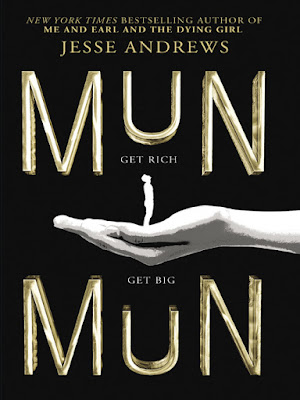
Munmun by Jesse Andrews


After rereading Me and Earl and the Dying Girl last week, I was excited to try another book by Jesse Andrews. I settled on Munmun, a novel quite different to the young adult contemporary that I know this author for. I started off my reading a little uncertain as to whether I would end up liking it. When Stephen Chbosky moved from young adult contemporary to something different, I ended up absolutely hating it. I didn't want it to be the same situation here. Plus, the plot description of Munmun is just bizarre. Still though, I wanted to give it a shot and see if I might find another favorite. 

Munmun is set in an alternate version of the United States in which a person's material wealth determines their physical size. The more munmun (money) you have in the bank, the bigger you are. The poorest of society, known as the littlepoor, are about the size of rats. The ultra-wealthy are literal giants, towering over everyone. The plot of the novel follows Warner, a littlepoor who is on a mission with his sister, Prayer, to try and get bigger. This is not an easy thing to do, as littlepoors are too small for things like public schools, cars, and phones. Warner and Prayer are facing immense disadvantages as they try to make their way around their city and search for opportunities. Their journey together is anything but straightforward and brings them into contact with people all over the scale of possible sizes. Many of these people try to exploit the siblings, and navigating through their world is confusing at best and dangerous at worst.

One advantage Warner does have is his ability to dream. In this universe, the dream world is a shared space. When people fall asleep, they all show up in the same unconscious plane of existence. They can speak and interact with others, even those who are physically far away from them in the waking world. Most people can't really control what they do in the dream world; they just drift along aimlessly. Warner, though, can create intricate images and experiences for people. He is capable of dreaming up peaceful vistas, bizarre adventures, or terrifying nightmares. This ability sets him apart from others, and figuring out a way to translate it into munmuns just might be the answer to securing his family's future.

Munmun was incredibly strange, but incredibly great as well. I really found myself enjoying the absurd world that Andrews created. It was filled with weird language, impossible biology, and dystopian rules. Its message about wealth inequality was well-crafted and creatively expressed. Beyond its themes, the story was compelling on its own. I read this quickly, anxious to see where Warner would end up. I was continually challenged by the text to decipher its weird little phrasings and identify the parallels between it and our world. It was a totally unique and unexpected reading experience for me, and for that nice surprise, I'm calling this one a new favorite. 

The symbolism in Munmun is not subtle. It's clear what Andrews is trying to say as we watch the bigrich giants in society literally step all over the littlepoors. Watching Warner be physically unable to access schools, cars, phones, and the attention of the police is a clear message about how those living below the poverty line find it difficult to access these things in real life. In addition to the obvious, however, Andrews also touches on aspects of poverty that readers may not have given much thought to before. For example, when richer characters show kindness to Warner and Prayer, there is nearly always something sinister or selfish behind it. They have to constantly be on their guard against all sorts of exploitation. They can never just trust anyone - everything has strings attached somehow. They are also constantly made to feel shame for not measuring up (figuratively and literally in this case) to wealthier people. This is so ingrained into their minds that Warner keeps reminding himself to feel ashamed when talking to other characters. There were a lot of situations sprinkled throughout the story that made me pause and realize how privileged I am to not have the same type of worries the littlepoors have.

The idea that was the most intriguing to me, and the reason I am rating this novel five stars, is the acknowledgement that in order to help those on the bottom rung of society, we need to be willing to weaken ourselves. Logically speaking, I know that a society that wants to support its most vulnerable members must make sacrifices (i.e. pay more taxes). However, the way that Andrews explores this concept within his work made me think about it in a different way. In Warner's world, if a richer person shares money with a poorer person, the poorer person will grow bigger. At the same time, the richer person will have to get a bit smaller. You have to purposefully lower yourself in the world, which is a tough thing to get anyone with a lot of accumulated wealth to do. At one point, Warner puts forth an idea that if the wealthiest members of society could contribute a small portion of their munmuns to the little poor, they could get everyone tall enough to access everything they needed. He, of course, is given several reasons why that would never work that all go back to protecting the wealthy. The height analogy provided a different lens to view these ideas in, and I thought it worked well.

That being said, I know that Munmun is not a book that everyone will enjoy. The wacky language and surreal universe will not be everyone's cup of tea, and the swearing throughout the text will certainly turn some readers off. Those that like unorthodox fiction though, will find this to be a quirky story about an important social issue. I don't think that I like this one more than Me and Earl and the Dying Girl, but it was definitely a winner. It made me laugh and think, and that's an excellent combination in young adult fiction. I look forward to reading more from Jesse Andrews in the future.


Challenge Tally
Then vs. Now: 12/27

Total Books Read in 2020: 45


Friday, June 5, 2020

Me and Earl and the Dying Girl by Jesse Andrews


When I first read Me and Earl and the Dying Girl back in 2015, it became an instant favorite. I don't usually love stories that center around a character with cancer, but this one was so quirky and unique that it instantly won me over. I picked up a few other novels by Jesse Andrews over the years, but never got around to actually reading them. So, when I was selecting books for my Then Versus Now Challenge, I knew that this was one favorite I could easily revisit and compare to a different Andrews book. I started off my reading hopeful that this story would still hold up, five years later.

The plot of the novel follows a teenager named Greg Gaines. He is just about to start his senior year of high school, and is looking forward to being on the top of the pecking order for once. He tells his story to the reader in first person, and kicks off his narration with an explanation of the social strategy he has been successfully employing for years. Essentially, he fits in with every group of kids in his school, but does not get close enough to any of them to be an actual part of any defined social circle. He is on good terms with the band geeks, the goths, the popular kids, and everyone in between, but isn't an actual member of any of those groups. This allows him to float along without getting picked on or bothered by anyone, which is exactly what he wants.

Another effect of his social strategy, however, is that he has hardly any real friends. The one exception to this is Earl, a short, foulmouthed, chain smoking classmate that he has been close with since grade school. Earl is an odd character to say the least. He has an extremely troubled family life, struggles with anger and aggression, and works far below his potential at school. He is also hilarious and surprisingly caring under the surface. He is different from Greg in almost every way. Still, they managed to bond over a shared love of movies, and now they make films together. They've made a ton of these over the years, but they don't ever show them to anyone, and Greg freely admits that they are all terrible. 

Greg's carefully constructed anonymity comes to an end at the start of the story when his mother gives him the awful news that Rachel Kushner, an old acquaintance of his that he knew from Hebrew school when he was twelve, has been diagnosed with an aggressive form of leukemia. She insists that Greg make an effort to be friends with her again and support her through her illness. Greg does not want to do this. He barely knows Rachel and hasn't spoken to her in years. He doesn't feel like he can deny this request, however, so he starts visiting her.

At first, his visits with Rachel are extremely awkward. Eventually though, his sense of humor helps them start to form a friendly relationship. After a while, Earl joins in and starts hanging out with Rachel too, who is getting steadily sicker and sicker. As word spreads at school about how Greg is supporting Rachel, he starts getting a lot of attention from classmates, who either assume that he is dating her and is in love with her, or that he is some kind of amazingly empathetic and generous person, neither of which are true. This all makes Greg, who values his privacy above all else, very uncomfortable. Even worse, Earl, in an effort to cheer Rachel up, lets her watch all of their personal films. When a classmate at school discovers this, she essentially guilts Greg and Earl into promising to make a movie especially for Rachel, and their struggle to do this leads them down a difficult and emotional path.

I'm happy to say that I loved this book just as much the second time around. It's so different to other young adult contemporary novels I have read, and in the best possible way. Andrews leaves the themes of the novel beautifully messy. Greg himself explains numerous times that this isn't the kind of story where a sick girl teaches the people around her important lessons and makes them realize big ideas about life and death. In one of my favorite sections of the novel, he says that his experiences with Rachel made life less meaningful to him. Greg didn't love Rachel; he barely knew her and he acknowledges that he probably would never have formed a relationship with her if she didn't get sick. He consistently feels guilty for not feeling bad enough about her situation--for being unable to stop thinking about himself when there is someone literally dying just steps away from him. Still, however, he is profoundly changed by his time with her in ways he does not understand and can't explain. This feels so realistic to how an illness can charge in and cause absolute chaos in people's lives. The lessons learned in the aftermath of cancer are seldom neat and tidy. It is traumatic to be sick and it is traumatic to watch someone be sick. It's a black hole of everyone's worst emotions. Greg's story captures that whirlwind and leaves things foggy. He doesn't become inspired by Rachel's struggle, it wrecks him, and while things do end on a note of hope, it is clear that he will be carrying the weight of his time with her for a long time to come.

In addition to the honest themes, the novel is surprisingly funny. Greg's voice as a narrator is a perfect blend of awkwardness, sarcasm, and self-loathing. He swears an awful lot, which may turn off some readers, but I think his narration definitely reads "teenage boy," and his humor wasn't too witty for his age in the way that other young adult protagonists' tends to be (i.e. John Green's way-too-worldly teens). Of course, Earl's character is especially funny and even more off-the-wall and foulmouthed. I frequently found myself smirking and laughing out loud as I read, which I don't often do. The humor helped to take the edge off the dark subject matter of the story, and I found it to be really enjoyable. 

The relationship between Greg and Earl was a complex one to watch develop as well. Earl's home life is in shambles, and Greg, with his middle class house and traditional parents, are an escape for him. The movies they make together are really the only extra hobby or interest that they have and they are both each other's only close friends. Their rapport with each other is often oddly aloof, but it works for them. They have a good balance going. Their interactions with Rachel, however, have a large impact on how they see each other. Despite his tough exterior, Earl is the more thoughtful of the two, planning hospital visits and sharing their movies with her. Greg is forced out of his comfort zone by Earl's participation in the friendship, and is quite upset by him sharing their films. They way they interact with each other changes over the course of the story, but again, not in a clear cut good-or-bad kind of way. I liked watching how they changed and considering the ways they grew (or not) throughout their experience.

Ultimately, Me and Early and the Dying Girl is an extremely moving read. Its emotional honesty and purposefully foggy themes make for a very thoughtful experience. For me, this is one of those books that gives you a hangover after reading because you just have so much to turn over in your brain. It definitely remains one of my favorites. I will be trying another book by Andrews next - one that is totally different to this one in genre and theme. I'm excited to see if I will find another favorite.     


Challenge Tally
Then vs. Now: 11/27

Total Books Read in 2020: 44


Saturday, May 30, 2020

May Wrap Up


May ended up being a pretty good reading month for me--much better than April at least. I finished eight novels in total, and I really enjoyed most of them. Here is what I finished:

The Book Thief by Markus Zusak
Bridge of Clay by Markus Zusak
Educated by Tara Westover
The Glimpses of the Moon by Edith Wharton
The Lost Girl by D.H. Lawrence
My Dark Vanessa by Kate Elizabeth Russell
The Turn of the Key by Ruth Ware
The Benefits of Being an Octopus by Ann Braden

I think my favorite read of the month was My Dark Vanessa, a novel that I found to be both very intriguing and deeply disturbing. I also really enjoyed my nonfiction pick, Educated, which was also a tough, but satisfying read. Both The Glimpses of the Moon and The Benefits of Being an Octopus were also great. Nothing rose to the level of being a new special favorite, but I read a lot of awesome works overall.

My least favorite read of the month was The Turn of the Key, which wasn't terrible, but pretty bland. I also didn't love Bridge of Clay, which I did not enjoy as much as previous works I had read by its author. In both cases however, I wasn't miserable reading, just occasionally bored.

My plans for next month have been decided for a long time. Back when I was teaching in school as normal and the world still made sense, I thought that June would be a good time to finally tackle Lord of the Rings, as I would have more free time over the summer. I ended up with a lot more free time before that than I expected, but I stuck to my original plan anyway. I waited for June and now I'm going to Middle-earth! Here's the full TBR list:

Me and Earl and the Dying Girl by Jesse Andrews
Munmun by Jesse Andrews
The Book Whisperer by Donalyn Miller
The Fellowship of the Ring by J.R.R. Tolkien
The Two Towers by J.R.R. Tolkien
The Return of the King by J.R.R. Tolkien

I'm excited to finally get around to reading what is probably the most famous fantasy series of all time, and continuing on with my other challenges. Hopefully June will be just as successful a reading month as May was.

The Benefits of Being an Octopus by Ann Braden


With a few more days left in May, I decided to wrap up the month with one of the middle grade novels I had sitting on my shelf. I picked up The Benefits of Being an Octopus a few years ago, with the aim of being able to use it in my classroom. I started my reading hoping to find a solid story to recommend to my eighth graders.

The novel centers around Zoey Albro, a seventh grader living in Vermont with her mother and three younger siblings. They are living below the poverty line, and have moved around quite a bit over the past several years. As the story begins, they are currently staying with their mom's boyfriend, Lenny, in his trailer. Lenny has a full time job and keeps a clean home, but is emotionally volatile. Zoey and her family live in fear of his cruel outbursts, but put up with it in order to keep a roof over their heads.

Living in poverty has taken a huge toll on Zoey. She is largely responsible for taking care of her young siblings after school, struggles to keep up with homework, and is frequently bullied for smelling like cigarette smoke and wearing old, dirty clothes. As a defense mechanism, she tries to model herself after her favorite animal, the octopus. The octopus is an escape artist, can squish itself down to a tiny size, and has powerful camouflage to blend into its surroundings, and Zoey employs all of these tactics to fly under the radar at school and make it through each day.

Her life begins to take a turn, however, when her history teacher, Ms. Rochambeau, begins to take a special interest in her and pushes her to join the debate club. She can sense that Zoey has a lot of potential underneath her quiet, defensive demeanor, and she encourages her to start speaking out and taking more control of her destiny. As her situation at home starts deteriorating, and her best friend Fuschia also begins to face some scary problems, Zoey takes her advice to heart and begins to take steps to change her life and better her situation. The octopus may be an expert at hiding, but it is also intelligent, curious, and has a firm grip, and soon, Zoey is embracing these aspects of her personality as well. The Benefits of Being an Octopus is a beautifully written coming of age tale that explores the devastating effects poverty has on families and the importance of refusing to disappear under the weight of one's problems.

This was a excellent read, and I was not disappointed in hoping that I could bring it into my classroom. Ann Braden's depiction of Zoey's poverty was accurate, sensitive, and heartbreaking. It mirrored the stories of many students I have had over the years. Her initial apathy towards school and struggle to assert herself are issues I have seen students display many times. It was inspiring and satisfying to watch Zoey work to overcome the many difficulties of her situation. I also loved seeing a teacher character be such a wonderful force for change in a novel. There are so many teachers in the world that have made incredible differences in their students' lives, and it was nice to see one depicted in this story. Braden's background is in teaching herself, so it's not surprising that she got so much right.

At just 254 pages, this is a relatively quick read. I finished it in a single sitting. For middle grade readers, it would take longer, but its length is perfect for its audience. It's not long enough to discourage kids from picking it up, and trust me, the amount of pages in a book is often the deciding factor behind whether kids will try to read something or not. The vocabulary is just right too. I could see a lot of kids being quite moved by this text. It has enough mild controversy in it to keep them engaged, and so many will be able to relate to it and learn from its themes. I know I will be recommending this one a lot once the school starts up again.

So ultimately, I ended up enjoying The Benefits of Being an Octopus a great deal--more than I initially thought I would. It is a simple tale, but a touching one. I think that anyone would benefit from reading it, but especially young people. Its message about the effects of poverty and the importance of keeping on trying in the face of incredible difficulties is a necessary one for people to hear. I'm quite satisfied to have found another book for my classroom library that I think will do a lot of good.  


Challenge Tally
Total Books Read in 2020: 43