About Favorites Classics Club Past Years Past Challenges

Saturday, May 30, 2020

May Wrap Up


May ended up being a pretty good reading month for me--much better than April at least. I finished eight novels in total, and I really enjoyed most of them. Here is what I finished:

The Book Thief by Markus Zusak
Bridge of Clay by Markus Zusak
Educated by Tara Westover
The Glimpses of the Moon by Edith Wharton
The Lost Girl by D.H. Lawrence
My Dark Vanessa by Kate Elizabeth Russell
The Turn of the Key by Ruth Ware
The Benefits of Being an Octopus by Ann Braden

I think my favorite read of the month was My Dark Vanessa, a novel that I found to be both very intriguing and deeply disturbing. I also really enjoyed my nonfiction pick, Educated, which was also a tough, but satisfying read. Both The Glimpses of the Moon and The Benefits of Being an Octopus were also great. Nothing rose to the level of being a new special favorite, but I read a lot of awesome works overall.

My least favorite read of the month was The Turn of the Key, which wasn't terrible, but pretty bland. I also didn't love Bridge of Clay, which I did not enjoy as much as previous works I had read by its author. In both cases however, I wasn't miserable reading, just occasionally bored.

My plans for next month have been decided for a long time. Back when I was teaching in school as normal and the world still made sense, I thought that June would be a good time to finally tackle Lord of the Rings, as I would have more free time over the summer. I ended up with a lot more free time before that than I expected, but I stuck to my original plan anyway. I waited for June and now I'm going to Middle-earth! Here's the full TBR list:

Me and Earl and the Dying Girl by Jesse Andrews
Munmun by Jesse Andrews
The Book Whisperer by Donalyn Miller
The Fellowship of the Ring by J.R.R. Tolkien
The Two Towers by J.R.R. Tolkien
The Return of the King by J.R.R. Tolkien

I'm excited to finally get around to reading what is probably the most famous fantasy series of all time, and continuing on with my other challenges. Hopefully June will be just as successful a reading month as May was.

The Benefits of Being an Octopus by Ann Braden


With a few more days left in May, I decided to wrap up the month with one of the middle grade novels I had sitting on my shelf. I picked up The Benefits of Being an Octopus a few years ago, with the aim of being able to use it in my classroom. I started my reading hoping to find a solid story to recommend to my eighth graders.

The novel centers around Zoey Albro, a seventh grader living in Vermont with her mother and three younger siblings. They are living below the poverty line, and have moved around quite a bit over the past several years. As the story begins, they are currently staying with their mom's boyfriend, Lenny, in his trailer. Lenny has a full time job and keeps a clean home, but is emotionally volatile. Zoey and her family live in fear of his cruel outbursts, but put up with it in order to keep a roof over their heads.

Living in poverty has taken a huge toll on Zoey. She is largely responsible for taking care of her young siblings after school, struggles to keep up with homework, and is frequently bullied for smelling like cigarette smoke and wearing old, dirty clothes. As a defense mechanism, she tries to model herself after her favorite animal, the octopus. The octopus is an escape artist, can squish itself down to a tiny size, and has powerful camouflage to blend into its surroundings, and Zoey employs all of these tactics to fly under the radar at school and make it through each day.

Her life begins to take a turn, however, when her history teacher, Ms. Rochambeau, begins to take a special interest in her and pushes her to join the debate club. She can sense that Zoey has a lot of potential underneath her quiet, defensive demeanor, and she encourages her to start speaking out and taking more control of her destiny. As her situation at home starts deteriorating, and her best friend Fuschia also begins to face some scary problems, Zoey takes her advice to heart and begins to take steps to change her life and better her situation. The octopus may be an expert at hiding, but it is also intelligent, curious, and has a firm grip, and soon, Zoey is embracing these aspects of her personality as well. The Benefits of Being an Octopus is a beautifully written coming of age tale that explores the devastating effects poverty has on families and the importance of refusing to disappear under the weight of one's problems.

This was a excellent read, and I was not disappointed in hoping that I could bring it into my classroom. Ann Braden's depiction of Zoey's poverty was accurate, sensitive, and heartbreaking. It mirrored the stories of many students I have had over the years. Her initial apathy towards school and struggle to assert herself are issues I have seen students display many times. It was inspiring and satisfying to watch Zoey work to overcome the many difficulties of her situation. I also loved seeing a teacher character be such a wonderful force for change in a novel. There are so many teachers in the world that have made incredible differences in their students' lives, and it was nice to see one depicted in this story. Braden's background is in teaching herself, so it's not surprising that she got so much right.

At just 254 pages, this is a relatively quick read. I finished it in a single sitting. For middle grade readers, it would take longer, but its length is perfect for its audience. It's not long enough to discourage kids from picking it up, and trust me, the amount of pages in a book is often the deciding factor behind whether kids will try to read something or not. The vocabulary is just right too. I could see a lot of kids being quite moved by this text. It has enough mild controversy in it to keep them engaged, and so many will be able to relate to it and learn from its themes. I know I will be recommending this one a lot once the school starts up again.

So ultimately, I ended up enjoying The Benefits of Being an Octopus a great deal--more than I initially thought I would. It is a simple tale, but a touching one. I think that anyone would benefit from reading it, but especially young people. Its message about the effects of poverty and the importance of keeping on trying in the face of incredible difficulties is a necessary one for people to hear. I'm quite satisfied to have found another book for my classroom library that I think will do a lot of good.  


Challenge Tally
Total Books Read in 2020: 43


The Turn of the Key by Ruth Ware


I finished reading all the books I had planned on a few days early this month, leaving me time to squish an extra book or two in before June. I wanted something easy and engaging, so I decided to try The Turn of the Key by Ruth Ware. This mystery thriller received a lot of attention when it came out last year, and I had seen numerous positive reviews for it online. I figured that this would be the perfect story to get lost in for a little while. I started off my reading with high hopes, expecting lots of twists  and suspense.

The plot follows a young woman named Rowan Caine, who begins the novel by writing a letter to a lawyer, begging him for help. She is currently in prison, accused of murdering a child under her care and wants him to represent her. She explains that once he hears the whole story of what happened, he will understand her situation and take her case. Her explanation of the events that led to her incarceration form the bulk of the rest of the novel.

She begins her story with the explanation of how she landed a lucrative new job as a live-in nanny.  Her new employers, Bill and Sandra Elincourt, are a pair of wealthy architects, and their Victorian style estate has been fully equipped with the latest smart home technology. The salary for the position is suspiciously high, but Sandra explains to Rowan that they've had difficulty keeping nannies in the house recently. The property has a bit of a spooky history, and the last several women in the position have allowed their superstitions to drive them away. The big salary is an effort to ensure that the next person sticks around. Undaunted, Rowan happily accepts the position and before long, the Elincourts leave her alone with the children for a few weeks while they travel to attend a conference.

Once Rowan is left alone with the children, a series of disturbing events begin. Her charges, eight-year-old Maddie, five-year-old Ellie, and baby Petra are difficult to manage, with Maddie in particular engaging in behaviors like running away, refusing to eat, and making vague disturbing comments to express her displeasure with her new nanny. In addition to the children's misbehavior, the advanced technology in the home starts going haywire for no reason, doors and windows seem to open and close of their own accord, items start inexplicably going missing, and mysterious noises occur at night that sound like someone is pacing around the house. Rowan doesn't believe in ghosts, but she's unable to figure out what's going on and is genuinely scared. These unsettling events continue until the tragic event that lands Rowan in prison occurs, where she must try to sort out what really happened and convince the lawyer she is writing to to help her.   

Sadly, I did not think that this book lived up to all the hype it received. It's wasn't a bad read, but it wasn't great either. I was frequently bored, especially in the first 100 pages, and never really felt tense or creeped out. I thought that way too much time was spent describing the features of the smart house, and not enough time was spent on actual, important plot events. In fact, thinking back, there weren't a lot of events, period. It was a couple hundred pages of kids misbehaving, technology malfunctioning, and doors opening and closing. All of the twists and reveals happened in the last 50 pages or so, and none of them were that surprising. I didn't exactly predict the ending, but there was only a limited number of characters that could be responsible for the weirdness...and it was one of them. So, it wasn't as thrilling or mysterious as I was expecting.

Even so, I mildly enjoyed the story and was interested in seeing what the ending would be. I finished it in a few days, and it was a nice, easy read. It was just fairly generic. I don't have much to say about it. This was my first Ruth Ware novel, and I can't say I'd be too interested in reading another. I'm pretty easily entertained by mystery/thrillers, but I just didn't see what a lot of other saw in this one. In any case, it's another book crossed off my TBR pile and ready to be donated. Hopefully another reader out there will fall into it the way I was hoping to.


Challenge Tally
Total Books Read in 2020: 42


Friday, May 29, 2020

My Dark Vanessa by Kate Elizabeth Russell


My Dark Vanessa was the last book I bough in physical form before Covid-19 made it difficult to go shopping for fun things. This novel received a lot of buzz prior to its publication because of its difficult subject matter, and I'd had my eye on it for a while. My usual routine is to be all excited for a new book, buy it, then let it sit around for years before finally reading it. This one, however, I actually wanted to read right away. So, after finishing up with my classics and challenge books for the month, I picked it up.

The novel centers around a young woman named Vanessa Wye, who entered into a sexual relationship with her English teacher when she was fifteen years old. The story is split across two timelines that alternate chapters. The first timeline is set in 2017, when Vanessa is an adult, and her teacher, Jacob Strane, is at the center of a Me Too scandal. Several other girls have come forward claiming that he abused them at the private boarding school where he teaches, and the school has opened an investigation against him. Vanessa, who has never come forward with any accusations against him, is still emotionally entangled in his life and has maintained spotty contact with him over the years. As Strane begins to feel more and more pressure, he begins contacting Vanessa in earnest again, trying to ensure that she will maintain her silence about what happened between them years ago. Naturally, this stirs up a lot of difficult feelings in Vanessa, who promises to maintain her silence. However, she is under intense pressure too, as her relationship with Strane was almost an open secret back when she was in school, and a reporter has started contacting her and urging her to come forward with her story. 

The second timeline starts off in 2000, when Vanessa first meets Strane in her sophomore year English class. This portion of the novel documents how Strane groomed her over the course of several months and then initiated a sexual relationship with her. As the school year progresses, Strane's control over her deepens to the point where she becomes obsessed with him and believes herself to be in love. Eventually, the amount of time they spend alone together is noticed by other students, and the efforts Strane takes to protect himself sends Vanessa off on a path of self-destructive decisions and emotional turmoil. As this timeline inches closer and closer to 2017, we see the story of how Strane's actions have pervaded every part of Vanessa's life, and how this harm extends far beyond the crimes he committed against her when she was a teenager.

This book was fantastic, but it was a difficult one to read. Kate Elizabeth Russell does not hold back or sugarcoat anything with her narration. We get Vanessa's story in graphic, uncomfortable detail. Her realistic portrayal of the sexual abuse Vanessa goes through is very effective at conveying the gravity of the situation and does not feel gratuitous or exploitative. Obviously, this still could be too much for some readers, but those who can stomach the frank descriptions will be rewarded with a complex story about the damage that sexual abuse can do to a young mind, and an interesting exploration of what being a victim is like for different survivors. 

Vanessa's development across the story was similarly well done. Russell wisely left her messy, challenging traditional notions about what a victim of sexual abuse is "supposed" to think and feel. The Vanessa we meet in 2017 is not particularly likable. She is prickly, depressed, and shockingly protective of her rapist. At first, it is difficult to understand how she could feel this way so many years after the abuse occurred. However, as we move through the sections of the story set in the past, we get a clear picture of how Strane's insidious grooming process has invaded her mind and altered her thoughts. He's made her believe that she was an equal participant in everything they did, that she was special and advanced for her age, and that she has a dark side to her personality that perfectly matched his. Watching this process unfold is chilling, and feels very accurate. As the story progresses, Vanessa is able to attain some perspective on what has happened to her, but her growth is not as clear or complete as many would expect, indicating the overwhelming difficulty of her situation. Coming to terms with an abusive past is often a lifelong process, and everyone's journey towards healing will look different. By leaving Vanessa in the thick of it, Russell makes a powerful statement about the variety of experiences women have recovering from trauma. 

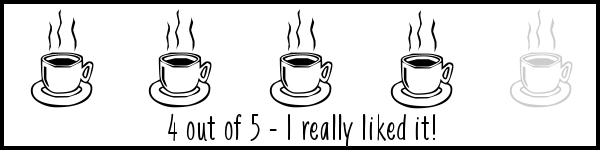
When I was considering what to rate this novel, I was very split between four or five stars. I obviously liked the book, and thought that it brought up a lot of excellent points about survivors of sexual abuse. I can't really point to any major flaws that bothered me. At the same time, I didn't feel that magical, special connection I feel when I read a book that I truly love. This is probably because I am an English teacher, to kids only a year younger than Vanessa was in this novel. I don't think I could ever call a book dealing with a teacher molesting students an all-time favorite. So, I ended up settling at four stars.

My Dark Vanessa was an extremely powerful and memorable read. The content is difficult to get through at times, but I believe that Russell's treatment of life after sexual assault is worth the discomfort. She raises a lot of necessary points about how survivors may respond to trauma, and gives an engrossing and heartbreaking example of one woman's experience. This is a work of fiction, but the emotions and situations shown mirror the experiences of many people. Reading it helps dispel the belief that abuse survivors should behave or think in any particular way. I feel strange saying that I enjoyed this novel, because it is not a happy or uplifting book by any stretch of the imagination, but it was most definitely worth reading. I am glad that I actually got around to reading it while it was new.


Challenge Tally
Total Books Read in 2020: 41


Monday, May 25, 2020

The Lost Girl by D.H. Lawrence


I bought D.H. Lawrence's The Lost Girl many years ago purely based on the vivid cover. I didn't know anything about Lawrence or about the plot of the novel, but it looked quite different to other classics that I had run across in Barnes and Noble, making it instantly attractive to me. This was back in the early 2000s, and the cover art on older books at that time generally featured drab paintings or black and white photographs. There are lot of beautiful and striking editions of classics available now, but back then, this one was quite unique. The playful fonts and bright colors were enough to convince me that this book must be special, and that I needed to add it to my collection.

I never got around to reading The Lost Girl back when I bought it (a never-ending theme in my life), and it remained on my shelves for years with the rest of my classics library. When I was putting together my Classics Club list at the end of 2016, the novel's quirky cover caught my eye once again and I made it a part of my challenge. I still knew nothing about its plot, so I stuck it in the "Wild Card" category. As I started reading this month, I realized what a good place for this story that was, as this ended up being a very weird experience.

The plot of the novel follows Alvina Houghton, a young woman living with her father and two elderly housekeepers in a small English coal mining town called Woodhouse. Alvina's father is a struggling shopkeeper with terrible instincts, and his current business, a fabric and notions shop, is constantly on the brink of failing. As a last ditch effort to reach financial success, he purchases a theater and begins to run a show mixing short films with live performances. In order to cut costs, he works selling tickets and makes Alvina play the piano to accompany the acts.

Alvina is initially horrified at this arrangement. Socially, the position is most definitely beneath her. She occupies an odd place in Woodhouse society. Her father has scraped together enough money to elevate her above the lower class of colliers that make up most of the town's population, and she has the manners and appearance of a lady. However, her father's eccentric approach to business and her own contrary and intense personality keep her at the fringes. She has no real friends outside of her housekeepers and few connections to the community she lives in. She has had a couple of romantic prospects in her past, but has ended up spurning them all as things got closer to marriage. Something within her won't let her settle for a boring and passionless life, no matter how sensible and safe that life may be. As a result, she finds herself drifting and rather purposeless. She is approaching spinsterhood, and being forced to work at her father's latest pipe dream is depressing, to say the least. That is, until the Natcha-Kee-Tawara come to town.

The Natcha-Kee-Tawara are a small acting troupe that Alvina's father hires to perform at his theater. They consist of an older woman and three young men, and they run an act about a fictional tribe of Native Americans. Alvina feels an instant attraction to one of the young men in the group, an Italian named Ciccio. After working together at the theater for a while, he begins to feel the same way and the pair begin a sexual relationship. They are wrong for each other in many ways, but Alvina can't deny the passion she feels for Ciccio. Pursuing that passion will lead her away from everything and everyone she knows, and her main struggle in the novel is deciding what she will sacrifice and how far she will go to keep this man in her life.

I'm not sure exactly what to make of this book. It was not bad at all, but it was so strange in many ways. I've been done with it for a few days now, and I'm still not clear on who Alvina was as a character and what I was supposed to take away from her story. The Lost Girl seemed to bounce all over the map. Some parts felt feminist and liberating, while other parts felt hopelessly sexist. Some parts seemed to promote following your heart, other parts showed Alvina as a helpless victim of fate. Some parts encouraged the breaking of restrictive social norms, other parts implied that breaking those norms leads to disaster. I had trouble wading through it all and trying to figure out exactly what Lawrence was trying to say.

A big part of my confusion came from Alvina's character. She had such an odd, contrary streak running through her that it was difficult to predict her choices and reactions throughout the story. She veers wildly between loving and hating all of the people and places in her life, and it was difficult to see why those changes occurred. In one memorable instance, she claimed to love her governess, Mrs. Frost, in one sentence, and then declare that she thought it was about time for her to die in the next. This pattern of shifting feelings continued throughout the novel, with even Ciccio receiving her undying affection and complete disdain in turns. I never knew what Alvina would decide to do next, because her principles were applied in such an inconsistent way. It was hard to see growth in her because all of her decisions felt almost random.

The theme felt similarly scattered. Despite Alvina's ever-shifting emotions, she does consistently follow her heart. She is sexually curious, determined to live with a man that excites her, and unable to settle down with a boring or unattractive partner just because it would be "smart" to do so. These elements would normally make for a strong, liberated female character. However, the outcomes of Alvina's decisions are a bewildering blend of happiness and sadness that make it unclear whether following her instincts was the correct decision. Deciding to be with Ciccio changes Alvina's life in ways that are terribly depressing, but she is with someone she feels a passionate connection to. The reader is left to ponder whether it was all worth it, and honestly, it doesn't feel like it was. What then, was the point of it all? I still don't know. The events of the story are too ambiguous to show a clear lesson either way.

I know I sound harsh here, but I really didn't dislike this novel. It was enjoyable enough and endlessly thought-provoking. Lawrence's writing was sensual and beautiful. This was my first novel by him, and I was pleasantly surprised by how nice the prose was to read. I was definitely confused as to the overall meaning of the story as I made my way through it, but it wasn't a frustrating confusion - it was more like a I-can't-imagine-where-this-is-going-so-I'd-better-keep-reading situation. It definitely had some pacing issues here and there, but it wasn't bad enough to seriously impact my experience.

What did impact my experience, however, was how poorly some elements of this have aged over the years. I was doing a lot of cringing as I read. The Natcha-Kee-Tawara act, for example, was pure redface. We get long descriptions of the war dances, fighting, and squaws that are based exclusively on Native American stereotypes. Elements of this were in the story a lot. Also, Ciccio's Italian heritage was constantly insulted, with racist remarks about his dirtiness, intelligence, unreliability, and dark skin color filling the pages. He was constantly described in animalistic terms, and the attraction Alvina felt for him was uncomfortably rooted in the primitive sexuality he exuded. The sexual activity between Alvina and Ciccio had issues as well. Alvina's consent to their encounters was extremely dubious. There was an uncomfortable amount of struggling and saying "no" beforehand. I was actually unsure as to whether Alvina was truly okay with what happened the first few times they were together, but it turned out to be a "no means yes" deal. I know that it's not fair to apply modern standards to a work that is a century old at this point, but there was a lot in here that you have to look past in order to enjoy the story.

So ultimately, I'm not quite sure what to make of The Lost Girl. It had strengths, it had weaknesses, and it definitely left me scratching my head. I'm not upset I read it, but I have a feeling that it won't be my favorite D.H. Lawrence novel. There are several more of his works I plan to check out in the future and I think that the best is yet to come for me.
 

Challenge Tally
Classics Club (#97 on my list): 74/100 

Total Books Read in 2020: 40


Sunday, May 17, 2020

The Glimpses of the Moon by Edith Wharton


Edith Wharton is one of my favorite classic authors, so naturally, I try to squish her work into my reading challenges whenever I can. I have her on my Classics Club list four times and I've used her a few times in my Back to the Classics lists as well. The Glimpses of the Moon is one of her novels that I'm using for both challenges this year. It's one of her less famous works, so I knew nothing about it before I started reading. I was curious to see what it was all about though, so I dove right in hoping to find another favorite.

The story is set in the 1920s and centers around Susy Branch and Nick Lansing. Both Susy and Nick run in wealthy circles and fill their days with fashion, art, parties, and lavish vacations. Unfortunately for the pair of them, they do not come from rich families and have no real money of their own. They get by on the kindness of their friends, making themselves such agreeable companions that others in their circle foot all of their bills. This is a precarious situation to be in, however, and their best chance at maintaining the glamorous lifestyle to which they have become accustomed is to marry well. Unfortunately for them, however, Susy and Nick fall in love with each other.

In order to enjoy each other's company for a long as possible, Susy comes up with an unconventional plan. They will marry each other, live for as long as possible off of the checks and favors they receive as wedding gifts, and then divorce once their money runs out or if either of them finds a wealthier spouse prospect. Divorces are easy to obtain and are now socially acceptable within their set, so this plan would not harm their reputations. Nick agrees to give it a shot and the pair are soon married and enjoying a free honeymoon in a friend's Italian villa on Lake Como.

The experiment starts off blissfully for the newlyweds, but things take a turn when one of their wealthy friends asks Susy for a shady favor in recompense for the use of her vacation home. She asks her to post some letters to help her cover up an affair. Susy, feeling trapped into going along with it, does the favor. She feels badly about it though, as this crosses a line for her, and she tries to hide her actions from Nick. Eventually he finds out, and is very upset. He totally disapproves of Susy's participation in the scheme and proposes ending their marriage then and there, believing their whole plan to be a failure if it causes them to lose their morals. Susy is mad at herself for posting the letters, but also believes Nick's reaction to be naive. Of course people will ask for favors in exchange for allowing them to use their property for free - how could he expect otherwise? She thinks he should know that sponging off people is a delicate dance requiring give and take.

This disagreement causes Nick to head off on his own to do some soul searching, and the pair must decide how, or if, they want to go on with their arrangement in the aftermath. Both travel around Europe, meet other people, and entertain the idea of finally divorcing and attaching themselves to better matches. They have ample time to think about the nature of money, relationships, and marriage, and consider if they want to continue attaching themselves to wealthy friends or discard that lifestyle and start earning their own cash. Ultimately, both must figure out a plan for their futures, and determine if that future is one in which they can be together.

I realize that reading my plot description makes The Glimpses of the Moon sounds like a shallow story about selfish people, but I thought this novel was excellent. The story was original and dramatic and truly engaging. Watching Susy and Nick attempt to navigate the world of the upper class with no money of their own was morally gray enough to be interesting, and I found myself constantly wondering how far I would go to keep my position among my friends if I were in their place. Despite the self-seeking nature of their marriage agreement, Susy and Nick do actually love each other--really love each other--and they both have personal standards as well. The strength of their feelings raises the stakes of the story and adds a layer of complexity that I appreciated.

As is usual in her fiction, Wharton does a good job examining the couple's problems along gender lines. Nick's personal standards are the more rigid of the pair. He is consistently uncomfortable with how Susy manages their affairs and treats her quite harshly when he learns about how she helped her friend cover up her affair. However, he doesn't seem to realize that as a man, it is much easier for him to walk away from this situation based on his morals. He can earn money from his travel writing, or find a respectable, if low paying, job working in a place like a bank. As a woman, Susy needs more money to maintain a fancy lifestyle when rapidly changing fashions are taken into account, and her options for earning money are much more limited and much lower paying than a man's would be. Susy is willing to do more than Nick is to maintain their lifestyle not necessarily because she is more selfish, but because she has more to lose than he does if she loses her position among her rich circle of friends. Nick's moralizing, while correct in an ethical sense, consistently irked me because he couldn't seem to understand Susy's position.

Both Nick and Susy grow and change across the novel as they grapple with their feelings and their plans for the future. Their development is well-written and the cast of secondary characters in the story provide interesting comparisons and contrasts to their situation. We see examples of the unabashedly selfish and the morally upright among their friends. We see frivolous divorces and strong marriages. We see those with money and those without. The examples of the people around them help both Nick and Susy think through their difficulties and develop their new philosophies. This story is finely crafted, and Wharton's exploration of the interactions between love and money felt real. I could understand why the different characters throughout the story felt the way they did. Even the ones that were annoying and unforgivably greedy were understandable.

The Glimpses of the Moon was a very good read, and I was surprised at how much I liked it. It wasn't quite perfect, of course. There were some issues with pacing towards the end and a bit too much hand-wringing over whether or not to salvage Nick and Susy's marriage overall. I'm not sure if the ending was quite right. In spite of those issues, however, this was still an excellent reading experience and one of my new favorite Wharton novels. It was not quite as compelling as what she created in The House of Mirth or The Age of Innocence, but I still thoroughly enjoyed this one and am happy to have picked it up.


Challenge Tally
Back to the Classics 2020 (A Classic with Nature in the Title): 8/12
Classics Club (#39 on my list): 73/100 

Total Books Read in 2020: 39


Educated by Tara Westover


Educated by Tara Westover received a ton of positive attention when it was published in 2018. This memoir of a young woman growing up with her survivalist parents in rural Idaho won a slew of awards and was recommended by several bookish celebrities, including Oprah, Bill Gates, and Michelle Obama. Naturally, I was interested in reading it, but was a little worried that it might not live up to all the hype it enjoyed. In any case, it was the perfect inclusion for my True Books Challenge, so onto my list it went. I decided to tackle it this month and find out if it was really as great as seemingly everyone was saying.

Westover begins her memoir with a description of her childhood home on a mountain in Idaho. She lived with her parents and six older siblings in a ramshackle house with few modern conveniences. Her parents were a mix of several different things - Mormon fundamentalists, survivalists, right wing extremists, and, in the case of her father especially, mentally ill, the combination of which made for a difficult and often abusive childhood. They did not believe in public education or modern medicine, so Tara never attended school growing up or went to a doctor. Instead, she spent her days working in her father's junkyard, an extremely dangerous job that continually maimed her and her siblings. When injuries occurred, her mother would use alternative medicine and faith healing to treat them. The family's distrust of the outside world was so great that most of the children, including Tara, were born at home and did not have birth certificates. 

As Tara gets older, she becomes interested in escaping the dangerous junkyard and limited opportunities that life on the mountain provided. She still loved her family, but she yearned for a different life. With the help of a friend, she taught herself enough math to pass the ACT and applied to BYU, claiming to have been homeschooled. She ends up getting accepted there, and leaves home, very much against the wishes of her father. From this point on, the memoir shifts from describing her insulated childhood to her exploration of the wider world.

Her first years at college are very trying, as she quickly discovers that she has never heard of many basic things most people learn about growing up in mainstream society. In a particularly embarrassing moment, she raises her hand and asks what the Holocaust was during a lecture. She works hard to educate herself  as she goes along and ends up earning top marks. Through various relationships she builds with professors and scholarship opportunities she takes advantage of, she ends up all the way across the ocean in England, where she eventually earns a Ph.D. from Cambridge. Throughout all of this, she works to maintain her relationship with her family, but as she is moving further towards the mainstream, they continually move even further away from it. Soon, she must make some difficult decisions in order to protect herself and maintain her new independence.

This book absolutely lived up to the hype. I was pulled in from page one and raced through this novel in just a few days. Westover's story is both absolutely fascinating and very difficult to read. She endures incredible emotional and physical abuse, and watching her overcome it is satisfying and inspiring. I can't imagine how much strength and effort it must have taken her to force herself away from the only home she had ever known, alone and against her family's wishes, to pursue a better life. No matter how difficult and wrong your home life is, walking away from it all is still really scary. Westover's struggle to do that is incredible and very compelling. It was almost frustrating, watching her persistently try to insert herself back into a family that was dangerous for her, but I can understand where she was coming from. Family relationships are difficult bonds to break for most people.

Westover's writing style is both beautiful and very easy to read. She uses a lot of nice imagery to convey her experiences, a technique which seems almost impossible when you consider her lack of education. The pace of the memoir is generally good, with only a few sections (mostly towards the end) dragging a bit. On the whole, this was an excellent reading experience and an almost impossible story. It had that same type of compelling "can't look away" factor that Tiger King had. It's unbelievable that people actually live like this and totally fascinating to read about it.  

I obviously really enjoyed my experience reading Educated, but there were a few weak spots. As I mentioned previously, some sections dragged or were repetitive. Also, I felt like there were some times where information I would have liked to know more about were glossed over or skipped entirely. There was also more than one moment in the books where Westover admits that her memory is hazy or differs from how her family remembers the same events. I do not think that she was dishonest with any of her recollections, but I do think that the memoir didn't flow quite as well as it could have in a few instances. I can hardly blame her for this though, as her younger years were so traumatic that it's hardly surprising that details have slipped away or become distorted in her mind.

Overall, Educated was an excellent read and I would highly recommend it. The story was inspiring and interesting and, for me, it did live up to all the glowing reviews it received. It was a disturbing little window into a world I knew nothing about and I know that Westover's words will stick with me for a while. When I finished reading this, I immediately texted my mom and got her to pick it up, which is not something I do often, especially for a nonfiction book. It definitely made an impact on me and was an excellent addition to my True Books Challenge.


Challenge Tally
True Books 2020: 8/14


Total Books Read in 2020: 38